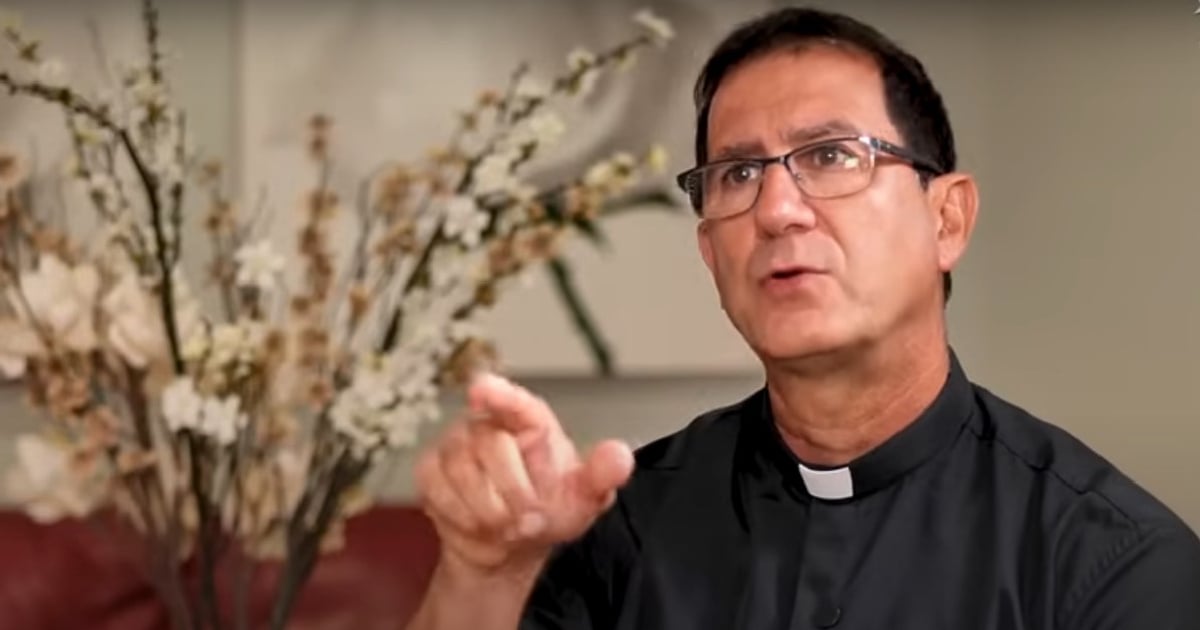
Alberto Reyes, a priest from Camagüey known for his outspoken criticism of Cuba's government, recently shared a striking message on Facebook highlighting the severe crisis engulfing the island nation.
Reyes argues that for decades, the Cuban population has been plagued by shortages, hunger, helplessness, repression, and frustration, leading many to normalize even death itself.
"We are dying. Cuba has become an island of decaying streets, where trash accumulates shamelessly, breeding a multitude of preventable yet easily transmitted diseases," he stated.
He points to dengue, Zika, chikungunya, and other arboviruses, emphasizing that lives are being lost amid "the apathy and inaction of a government that only looks after itself."
The priest criticized the populace's passivity in the face of state inefficiency: the death of loved ones and suffering due to the lack of basic medical care have become part of daily life, while solutions from authorities, who neither can nor care to provide them, are awaited.
The Zombie Nation: A Critique of Passive Endurance
Reyes also highlights how continued support for a system that perpetuates misery—by participating in marches, gatherings, or applauding empty speeches—has turned the Cuban people into what he describes as "a nation of zombies."
In his view, those in power have fortified a regime that benefits only an elite, dehumanizing the lives of the majority and prolonging widespread suffering.
"What more do our rulers want from the people? Is it money, the absurd thrill of wielding power, securing the future for an elite, or the sick pleasure of looking out a window and thinking 'all of this is mine'?" he questioned.
"Why this relentless effort to make our lives increasingly miserable? Why don't they just leave us to build a different history?" he emphasized.
A Call to Rethink Collective Life in Cuba
Reyes questions how this condition has persisted for so long, asserting that regardless of its name—communism, socialism, the left—it only brings repression and misery.
"Is Cuba truly destined to one day become that 'beacon and guide' often spoken of, to remind its children to never again allow another dictatorship on this soil?" he inquired.
The priest's reflection serves as an urgent call to reconsider collective life in a nation where government neglect and resource scarcity have turned survival into a daily challenge.
"Thoughts crowd my mind as those around me struggle to survive... while others perish," he concluded.
An Insight into Cuban Resilience and Struggle
Exploring the Crisis in Cuba: Key Questions Answered
What does the priest accuse the Cuban government of?
The priest accuses the Cuban government of apathy and inaction, focusing solely on protecting itself while neglecting the needs of the population, which results in widespread suffering and preventable deaths.
How does the priest describe the current state of Cuba?
He describes Cuba as an island of decaying streets, plagued by disease and death, where the population has become desensitized to the suffering caused by shortages and government inefficiency.
What is the priest's message to the Cuban people?
The priest encourages the Cuban people to rethink their support of a system that perpetuates misery and to strive for a different, more hopeful future free of dictatorship.