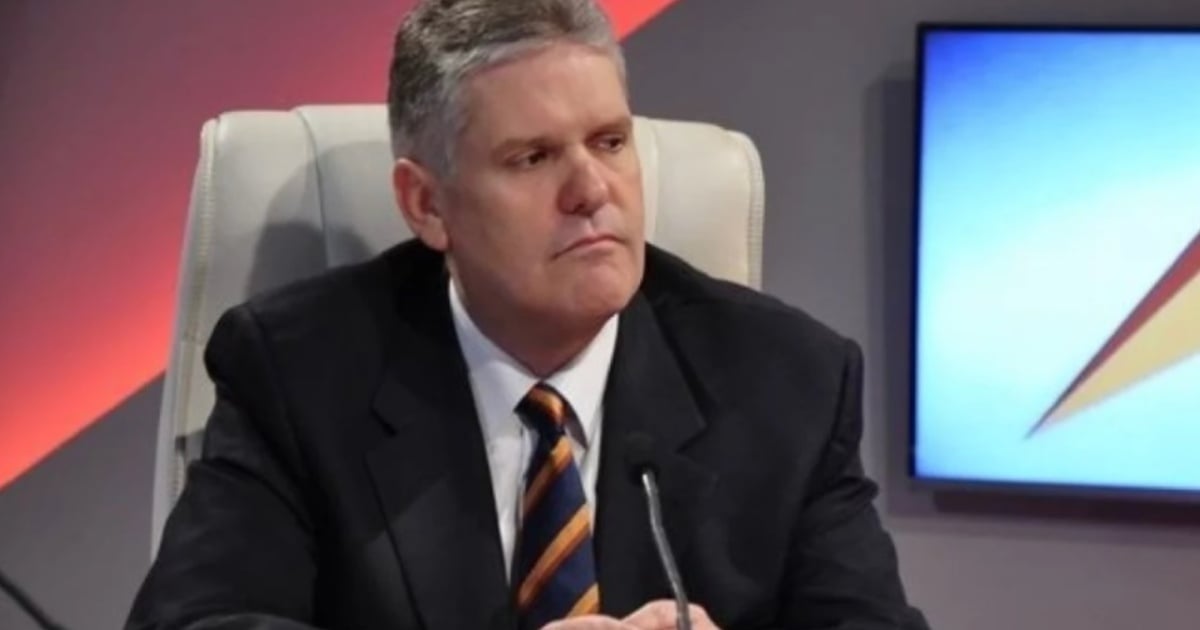
The trial of Alejandro Gil Fernández, Cuba's former Minister of Economy, wrapped up this past Thursday in Havana. The proceedings were shrouded in secrecy, conducted behind closed doors, and lacked transparency.
Held at the Marianao Court and overseen by the Supreme People's Court, the trial is now "awaiting judgment," as confirmed by journalist Mario J. Pentón on Facebook.
Gil Fernández is facing a slew of charges, including espionage, embezzlement, bribery, tax evasion, money laundering, forgery of public documents, influence peddling, and acts detrimental to economic activity or contracting, among others.
The trial unfolded under a veil of absolute secrecy, with limited family access and a complete absence of independent media, highlighting once again the opacity of Cuba's judicial system in cases deemed as "against state security."
In a recent statement to YouTuber Darwin Santana, his sister and former TV presenter, María Victoria Gil, expressed her grievances: “The trial took place over two days behind closed doors, with heavy security for the public and press, in total secrecy.”
Visibly distressed, María Victoria Gil conveyed her family's sense of alienation and betrayal by what she described as a "closed trial, lacking transparency."
"My niece wasn't allowed to enter... only my nephew was, and he hasn't said anything," she recounted.
Despite expressing respect for Supreme Court President Rubén Remigio Ferro and defense attorney Abel Solá, an esteemed criminal lawyer specializing in espionage cases, she admitted her institutional trust is tinged with bitter resignation.
“I hoped fervently that before the oral trial, the case would be dismissed for lack of evidence... but it wasn't. I prayed to God for it, but it didn't happen,” she lamented.
María Victoria Gil believes her brother's fate is already sealed: “I fear it’s a predetermined sentence. God willing, I'm wrong.”
Possible Outcomes
According to María Victoria Gil, there are now only three potential scenarios:
1: The prosecution maintains its call for a life sentence, upholding the provisional conclusions.
2: It alters the conclusions and requests a lesser penalty.
3: It drops the charges entirely, though María Victoria Gil herself acknowledged that this last possibility is “like asking God for the impossible.”
“I swear on all that is sacred, I have no information,” she clarified.
A Trial Under Surveillance and Censorship
The case of Alejandro Gil, a former minister and once a key figure in Miguel Díaz-Canel's economic team until his downfall, has been enveloped in censorship and official silence amidst an unprecedented economic, health, and political crisis in Cuba.
No state media has disclosed details about the charges or the evidence presented during the trial, which could result in either an exemplary life sentence or a symbolic verdict intended to serve as a disciplinary message within the political apparatus.
Gil Fernández's family clings to a slim hope in a judicial system that, according to their words, “offers neither transparency, justice, nor mercy.”
“We are facing a process that seems pre-written. My brother is in the hands of a system that punishes the fall, not the crime,” concluded María Victoria Gil.
Frequently Asked Questions About Alejandro Gil's Trial
What charges does Alejandro Gil Fernández face?
Alejandro Gil Fernández is charged with espionage, embezzlement, bribery, tax evasion, money laundering, forgery of public documents, influence peddling, and acts detrimental to economic activity or contracting, among others.
What are the possible outcomes of the trial?
There are three potential outcomes: the prosecution could uphold its request for a life sentence, alter the conclusions for a lesser sentence, or drop the charges altogether, although the latter is considered highly unlikely.
How has the trial been conducted?
The trial was conducted in secrecy, behind closed doors, with restricted family access and no independent media presence, reflecting the opaque nature of Cuba's judicial system in politically sensitive cases.