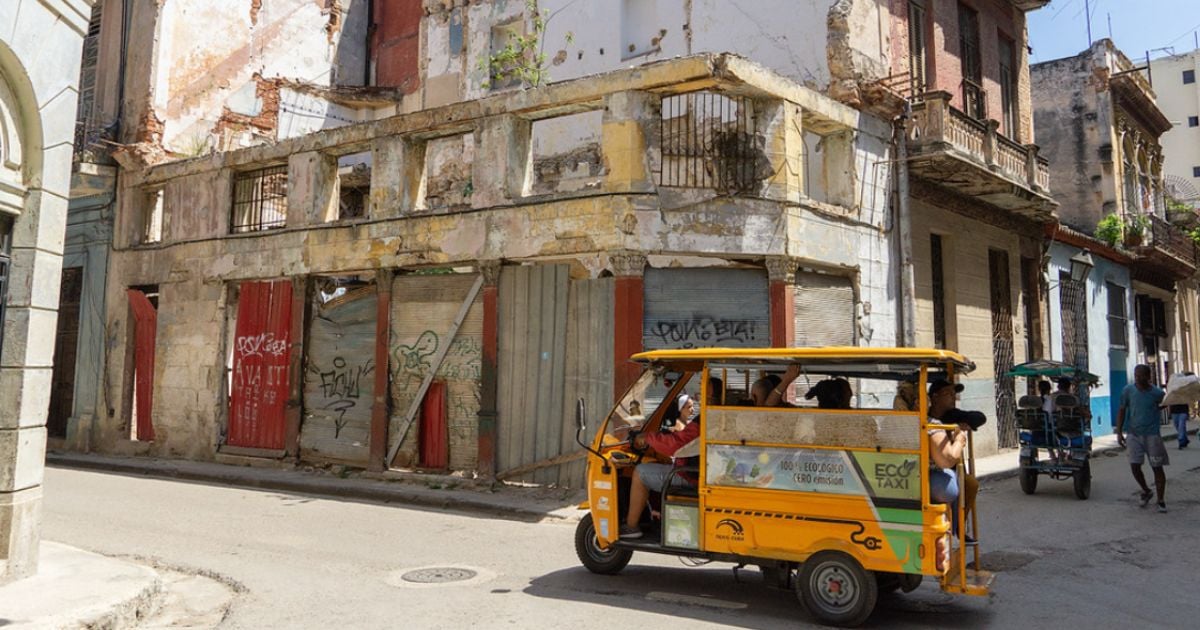
Despite grappling with a severe energy crisis and an outdated electrical system failing to meet the basic needs of its citizens, the Cuban regime is pushing forward with plans for electric mobility and the creation of "sustainable cities" with assistance from South Korea.
Eduardo Rodríguez Dávila, the Cuban Minister of Transport, announced on Facebook that as of October 27, a seminar titled "Capacity Building for Electric Mobility in Urban Transport in Cuba" commenced in South Korea. This initiative has been organized by the Korea International Cooperation Agency (KOICA) and the International School of Urban Sciences at Seoul National University.
The program involves eight Cuban experts from the ministries of Transport, Industry, Higher Education, and Science, Technology, and Environment. As part of their training, these specialists visit South Korean institutions such as the Korea Electric Power Research Institute (KEPRI) and Seoul National University to learn about technical integration strategies, urban planning, and public education to gain societal acceptance for electric mobility.
Rodríguez emphasized that the Cuban experts are studying the integration of batteries, chargers, and smart grids, as well as the role of applied research in transforming urban transport. "This ensures that Cuban electric mobility will be planned with a systems engineering perspective, not just a transport viewpoint," he boldly stated, a claim that seems almost ripe for satire.
However, in a nation where widespread blackouts are part of daily life and electricity generation is heavily reliant on aging and neglected thermal plants, this project seems more like a distant dream than an imminent reality. While technical knowledge gained could inform future endeavors, the lack of investment, low levels of domestic production, and the fragile state of the electrical grid pose significant challenges to any serious plan for electrifying public transport on the island.
In parallel, over 150 Cubans are currently studying in Russian universities with the aim of "modernizing" Cuba's railway system. According to the Minister of Transport, this program is part of an intergovernmental agreement between Cuba and Russia to train engineers specializing in railway transport, rolling stock maintenance, railway lines, telecommunications, and automation.
Key Challenges and Opportunities for Electric Mobility in Cuba
What are the main obstacles to implementing electric mobility in Cuba?
The primary challenges include a dilapidated electrical grid, insufficient investment, and low levels of local production capacity. These factors make it difficult to develop a robust electric transportation infrastructure.
How is South Korea assisting Cuba in its electric mobility initiatives?
South Korea is supporting Cuba through seminars organized by KOICA and Seoul National University, where Cuban specialists learn about technical integration, urban planning, and public education strategies for electric mobility.
What role does applied research play in Cuba's transportation transformation?
Applied research is crucial for integrating new technologies such as batteries, chargers, and smart grids into Cuba's transportation system, enabling a more efficient and sustainable urban transport model.