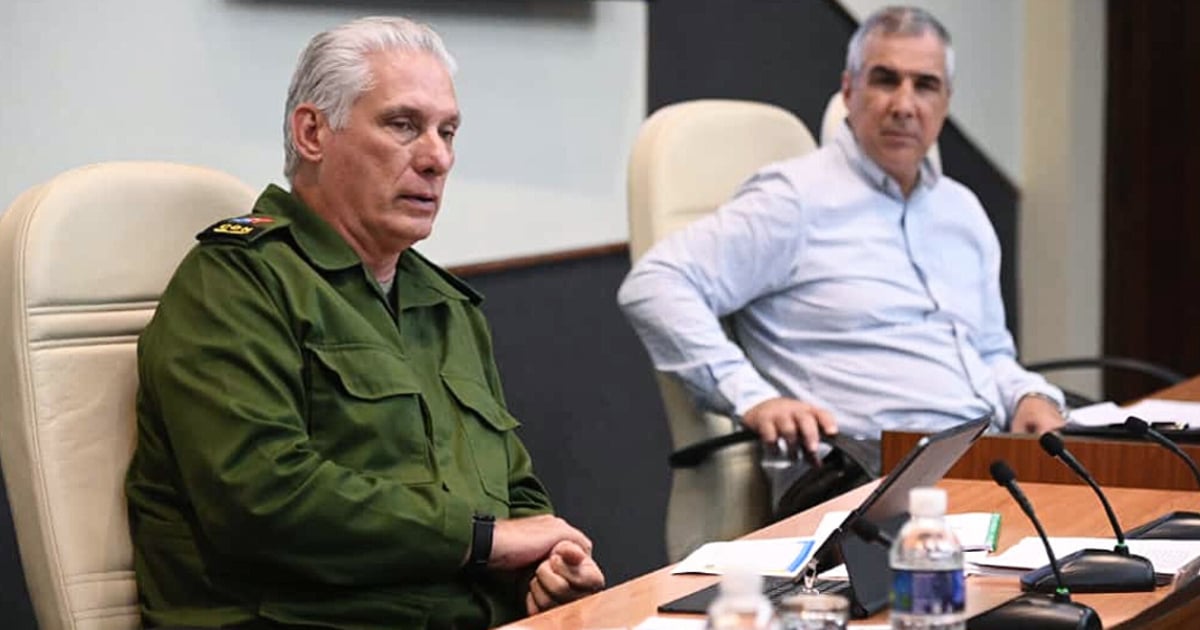
Recent remarks by Miguel Díaz-Canel concerning Cuba's ongoing epidemiological crisis have ignited a storm of criticism and mockery on social media. Many Cubans expressed outrage at his assurance that the government would address the epidemic "just as we tackled COVID-19."
In a post on his official profile, the Cuban leader stated, "We have called upon our scientists and experts from all fields of knowledge to confront arboviruses just as we did with COVID-19: utilizing a work system that enables science to provide urgent analysis and solutions."
These comments, also circulated by state-run outlets like Cubadebate, drew hundreds of responses reflecting the exhaustion, mistrust, and frustration of a weary population grappling with declining healthcare services and a lack of effective state response.
Public Outcry and Disbelief
Many users agreed that authorities reacted slowly. "Too late... when Matanzas was crying out about mass illness, they ignored it, claiming everything was under control," one user wrote. Another summed it up: "Now that half the country is sick, they always act late." Other comments echoed this sentiment: "It's too late to prevent these viruses from spreading" or "Dengue has been rampant for three years, now chikungunya, and there's no fumigation."
Criticism of Government Response
The tone of reactions ranged from anger and irony to fatigue. "It's laughable. It's infuriating. It's disgusting. It's frightening. It's sad. Poor us, Cubans, we mean nothing," one person wrote, while another sarcastically quipped, "If they're going to handle it like COVID, we're doomed." Other satirical messages included: "Lockdown for mosquitoes, then?" or "Are we going to queue to fumigate?"
Among the frequent criticisms, many directly blamed the state for the dire sanitary situation. "The country is collapsing," expressed one user. "What we need is to clean up the garbage, fix the leaks, and fumigate. There are no medications, no doctors, nothing," added another. "The state is responsible for this uncontrolled epidemic," opined another, noting that "before, they would fumigate for a single case of dengue, and now they don't even do that."
Trust Erosion in Institutions
The reactions also reveal a loss of trust in institutions. "They denied the epidemic until it was impossible to hide," one user wrote, while another pointed out that "they said it was just simple febrile syndromes, and now it's a full-blown epidemic." Some messages conveyed desperation: "Practically all of Cuba is infected"; "There's a sick person in every house"; "Entire families and neighborhoods are feverish."
Other accounts describe the severity of symptoms and the lack of medicine: "This disease leaves you crippled," "I've been suffering from pain and cramps for a month, without medication," "Paracetamol costs 800 pesos, and you have to be lucky to find it."
The feeling of abandonment and lack of transparency dominates the comments. "They left us to our fate, just like with COVID," wrote one individual, while another lamented that "in the years of the revolution, there was never so much neglect." Some users also alleged corruption in sanitation campaigns: "There is no environmental hygiene anywhere, Communales doesn't exist, it only serves to divert resources," commented one.
Calls for Accountability and Action
The discontent is especially palpable among those who recalled that warnings were ignored for weeks. "When Matanzas was crying out for help, they ignored it, saying everything was under control. Had they acted in time, the entire country wouldn't be in this state," lamented one message.
These reactions come amid a health crisis acknowledged even by the authorities, who admitted the spread of arboviruses with 38 municipalities actively transmitting dengue, over 21,000 chikungunya cases, and febrile outbreaks in 68 municipalities. A recent analysis highlights how the regime has responded with slogans and propaganda while hospitals collapse and the country relives the chaos of the pandemic.
From abroad, the Cuban Medical Guild in Exile blamed the government for the lack of medication and institutional neglect, warning that the epidemic "cannot be justified by climatic or seasonal factors, but by the abandonment and opacity of the health system." The exiled doctors demanded an urgent response from Díaz-Canel and Health Minister José Ángel Portal Miranda, alerting to the risk to the population.
Activist Amelia Calzadilla also called for a "humanitarian intervention," arguing that "the country is falling ill, and the regime knows it," accusing the government of "hiding the magnitude of the outbreak and abandoning the people to their fate." Her plea joins the denunciations of historian Yamilka Lafita Cancio, who warned that chikungunya "has led to increased hospitalizations, prolonged joint sequelae, and even deaths from systemic complications," with the state offering neither explanations nor effective measures.
Amidst this scenario, voices like that of physician and activist Lucio Enríquez Nodarse have even suggested that "Cuba needs a health and military intervention" to ensure access to medications and halt the collapse of the healthcare system, a stance reflecting the desperation and sense of abandonment felt by much of the citizenry.
"Every day there are more sick people," "This got out of hand," and "Once again, slogans instead of solutions" are phrases repeated in dozens of posts. Díaz-Canel's promise, far from instilling confidence, has become a symbol of frustration: "If they're going to handle the epidemic like COVID, God help us all."
Frequently Asked Questions About Cuba's Epidemic Response
What was Díaz-Canel's promise regarding the epidemic?
Díaz-Canel pledged to tackle the current epidemic in Cuba using the same approach as with COVID-19, involving scientists and experts to find urgent solutions.
How have Cubans reacted to Díaz-Canel's statements?
Cubans have reacted with criticism, mockery, and frustration, expressing disbelief and anger at what they see as a delayed and inadequate response from the authorities.
What are some criticisms regarding the government's handling of the epidemic?
Criticisms include the government's slow reaction, lack of effective measures, failure to address healthcare shortages, and accusations of neglect and mismanagement.