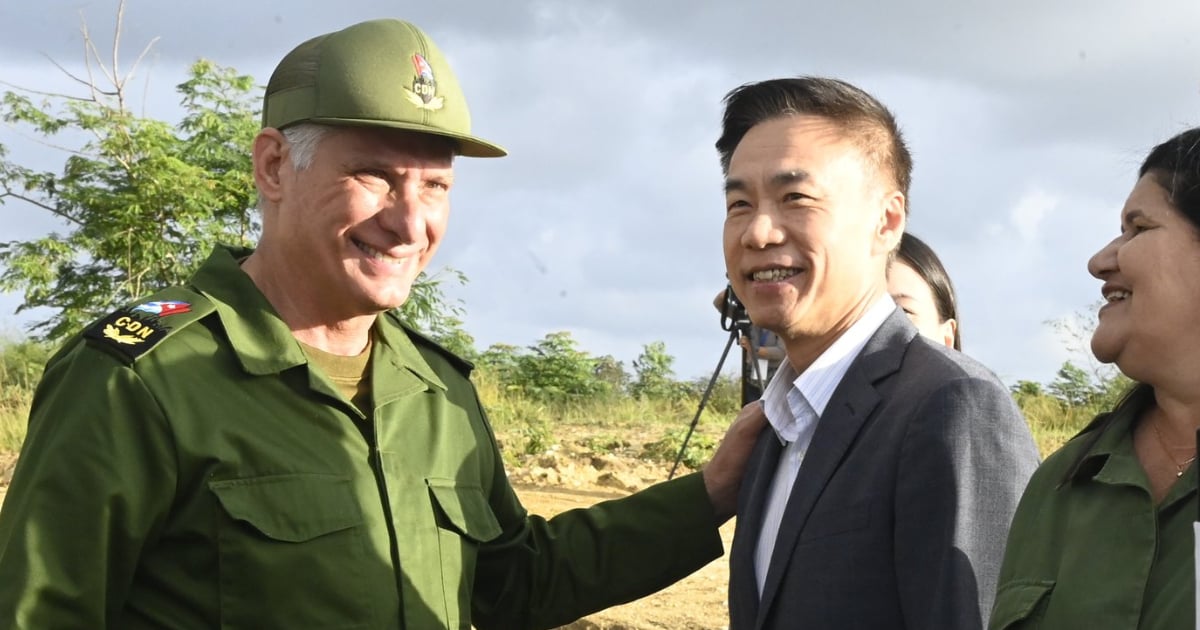
On Wednesday, China's ambassador to Cuba, Hua Xin, unveiled the integration of seven solar parks into the national electrical grid. These projects, built with China's technical assistance and funding, mark a significant step forward in renewable energy collaboration.
This initiative is part of the "35 MW Solar Parks Installation" program, which, according to the ambassador, is set to save approximately 18,000 tons of fuel annually. "All seven photovoltaic parks have been successfully connected to the grid," Hua Xin announced on the social media platform X, offering gratitude to Cuban leader Miguel Díaz-Canel for attending the opening ceremony.
The event was held at the "Mártires de Barbados II" solar park in Guanajay, Artemisa, where the Cuban communist leader presided over the inauguration, as reported by Cuba's presidential office.
Symbolic Project Amid Energy Crisis
The completion of this phase marks the conclusion of the first stage of the People's Republic of China's energy donation, which, through two phases, aims to install a total of 120 megawatts of power, according to Cuban officials.
However, this announcement comes at a dire time for Cuba, which is grappling with widespread blackouts and an almost complete breakdown of its national electrical system. Daily generation deficits exceed 1,500 MW, a critical shortfall.
This week, the Union Eléctrica (UNE) admitted that electrical service remains disrupted 24 hours a day, with provinces like Santiago de Cuba only regaining 34% of their electricity supply following Hurricane Melissa's impact.
Dependency and Propaganda
While these solar parks symbolize progress, experts argue their actual contribution is negligible against the vast energy deficit. Cuba remains heavily reliant on imported oil and foreign aid to maintain its infrastructure.
The regime, nevertheless, uses these projects to bolster its narrative of "resistance and solidarity cooperation," despite prolonged blackouts, water shortages, and food scarcity plaguing the population.
Analysts view the energy collaboration with Beijing as an extension of Cuba's economic dependency on its authoritarian allies, especially as the national electrical system teeters on the brink of collapse and domestic investment is nearly absent.
Understanding Cuba's Energy Challenges
How much fuel do the solar parks in Cuba save annually?
The solar parks are expected to save around 18,000 tons of fuel each year.
What is the current state of Cuba's electrical system?
Cuba's electrical system is facing severe challenges, with widespread blackouts and a daily generation deficit surpassing 1,500 MW.
What role does China play in Cuba's energy sector?
China is providing technical assistance and funding for solar parks in Cuba, as part of a broader energy collaboration to support the island's struggling infrastructure.