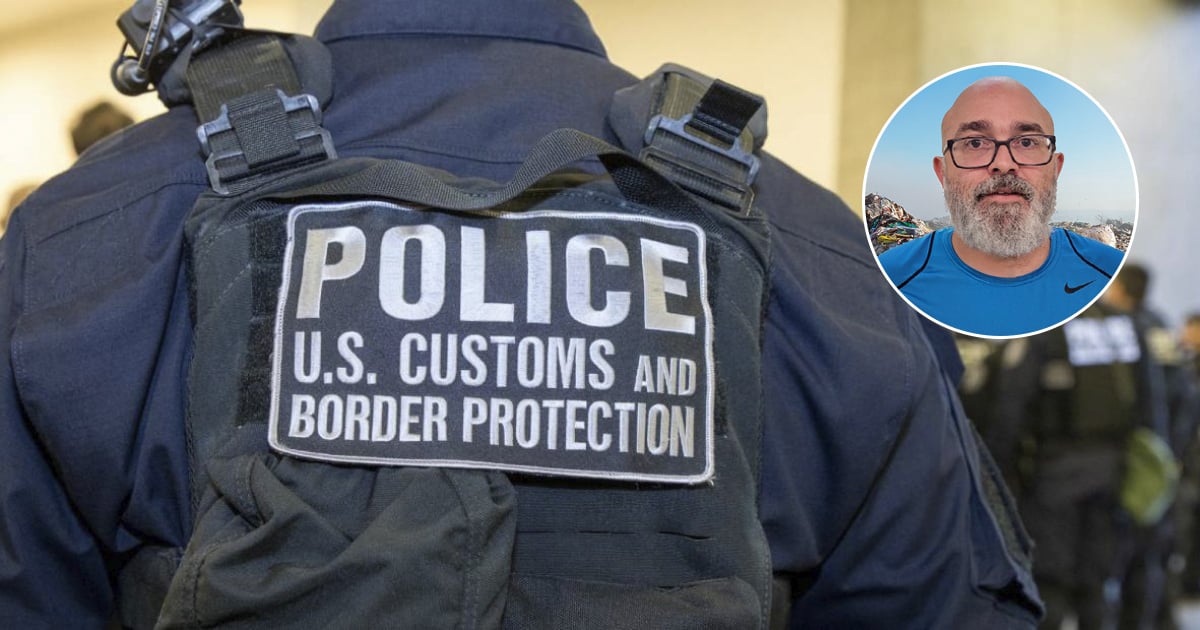
U.S. Customs and Border Protection (CBP) agents have apprehended a Cuban national in Georgia, who has been convicted of sexual crimes against minors and is now set to face deportation proceedings.
Michael Alard González, labeled a "convicted child predator," had been residing illegally in the United States since 1998. His arrest was announced last week via a statement from the federal agency on social media platform X.
CBP did not hold back in its condemnation of Alard González, branding him as "human trash" and a "savage," while releasing disturbing details of his criminal past.
“During his detention, he made abhorrent remarks. He confessed to driving around Georgia high schools, seeking out young girls with the intent to harm them and escape," the agency disclosed. "Thanks to CBP, this savage is now off the streets."
Recent Arrests Highlight Intensified Deportation Efforts
Alard González’s arrest is part of a series of recent detentions involving Cuban nationals who have been either convicted or charged with similar offenses and are awaiting deportation. This occurs amidst an intensified effort by the U.S. government to remove illegal immigrants with criminal records.
In Miami last week, the Immigration and Customs Enforcement (ICE) arrested Rolquis Torres Ricardo, whose criminal history includes convictions for child sexual abuse and domestic violence.
Additionally, Rolando Marino Cordero Rodríguez, a 76-year-old who entered the U.S. during the Mariel boatlift in 1980, was taken into custody by ICE on October 25 in Miami. Cordero Rodríguez was previously convicted and imprisoned in 1985 for a relationship with a 17-year-old girl and has had a final deportation order since 1997.
Challenges in Deportation to Cuba
These three individuals might face deportation to countries other than their homeland if the Cuban government refuses their return. Cuba's regime has been resistant to accepting nationals with criminal records in the U.S. or those who left before the January 2017 migration agreements, leading to deportations to third countries, some of which pose risks of torture or death.
According to the Department of Homeland Security (DHS), over 42,000 Cubans have final deportation orders. However, the Cuban government's reluctance to accept them back complicates these deportation processes.
Backed by a Supreme Court ruling, the Trump administration has deported illegal immigrants convicted of violent crimes to African countries, including South Sudan, Eswatini, and Rwanda, involving at least four Cubans. Others have been sent to Mexico.
Meanwhile, deportation flights from the U.S. to Cuba continue on a monthly basis under current migration agreements between the two nations.
Last Thursday, 232 individuals were returned to the island in the tenth such operation since President Donald Trump took office. From January 23 to November 6, 2025, a total of 1,231 Cuban migrants have been deported from the U.S. to Cuba by air.
Within less than 10 months, the Trump administration has repatriated more Cubans than the Biden administration did in nearly two years (978), since the resumption of ICE deportation flights in April 2023. This marks a clear indication of the strengthening of U.S. immigration policy in the past year.
Key Questions Regarding U.S. Deportation Policies
Why is Cuba refusing to accept deported nationals?
The Cuban regime has been resistant to receiving nationals who have criminal records in the U.S. or have been living abroad since before the migration agreements of January 2017.
What happens to Cuban nationals if Cuba refuses their return?
If Cuba refuses to accept deported nationals, they may be sent to third countries, some of which may pose risks such as torture or death.
How many Cubans have been deported by the Trump administration?
Since January 23 to November 6, 2025, the Trump administration has deported a total of 1,231 Cuban migrants by air.