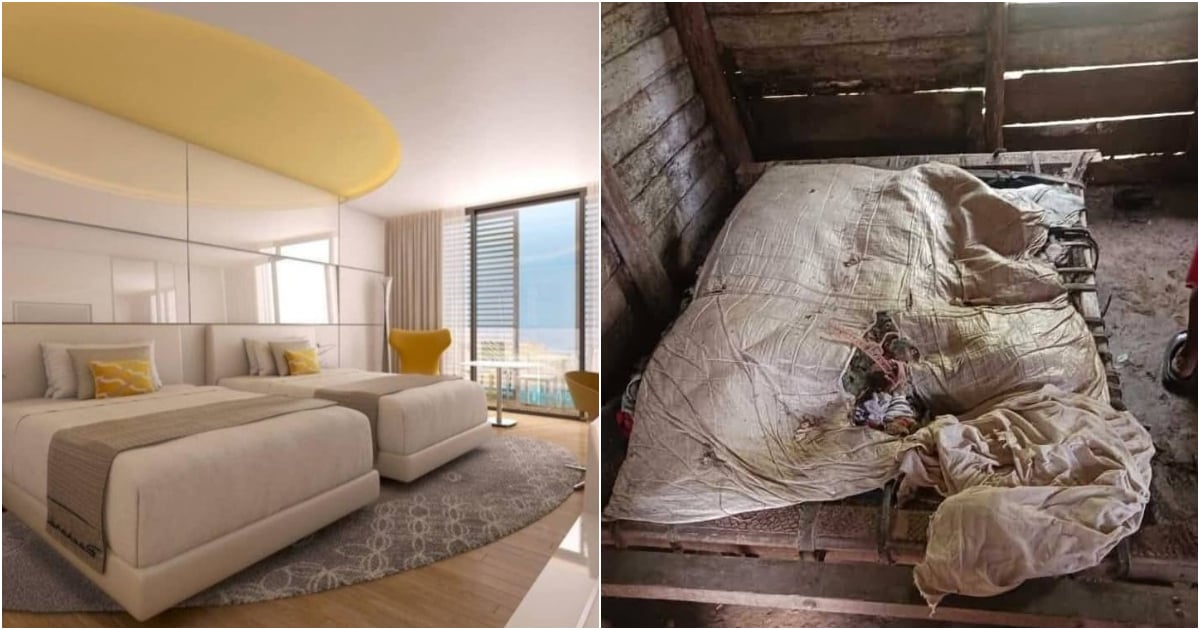
The official response to the shortage of beds for those affected by Hurricane Melissa has sparked a heated debate concerning the ethics, humanity, and political will of Cuban authorities and the resources available within the nation.
The controversy erupted after a video surfaced showing Miguel Díaz-Canel, the president of the National Defense Council, responding in a frustrated tone to a woman who had lost her bed, saying, "I don't have one to give you right now," amidst days of scarcity and anticipation for resources following the destructive storm.
Reacting to this, Yulieta Hernández Díaz, an engineer and businesswoman, criticized the lack of management and empathy from the leaders through her Facebook profile, pointing out that viable alternatives and sufficient resources exist if there were a genuine will to act.
Hernández highlighted that companies like Muebles Ludema (Las Tunas), Konfort, or the Dujo complex, which supply furniture to luxury hotels such as the Packard, Manzana Kempinski, or the Torre de K y 23 in Havana, could meet the demand for beds and mattresses with the millions in donations already received.
"If there is truly a desire to stop investing in hotels, that's part of the answer," she emphasized.
As a potential solution, she noted that hotel supplies, including beds and mattresses, "must be frequently renewed to maintain their standard and category. Add to this the thousands of currently vacant hotel rooms in the country, plus the mattresses received as part of international donations."
The author also stressed that poverty should not be used as a media spectacle, though she acknowledged that many of the images shared after the hurricane have exposed the structural poverty that the official discourse tries to conceal.
"A mattress is not a luxury. It's a basic necessity for rest, health, and recovery. You can't ask for patience from someone sleeping on the ground or without a roof. Dignity cannot be discussed without ensuring the basics," Hernández argued.
Numerous users supported the young engineer's reflections with comments that reveal anger toward the government's handling of the situation.
"If there's no bed, Mr. President, give yours to that woman," wrote an outraged user.
Others criticized the "media show" of the official tours and the lack of a real contingency plan that prioritizes the dignity and basic needs of those affected.
Some voices agreed that the emergency is not solely a result of the hurricane, but also due to the country's structural deterioration and the lack of will from a government and officials who shamelessly claim that "the hotels belong to the people," while more is spent on luxury facilities for tourism than on essential supplies for increasingly impoverished people.
Despite the prolonged stagnation of the tourism sector, the decline in visitor numbers, very low hotel occupancy, and the deep shortages affecting the population in key areas like public health and food production, the government and the military elite managing the Business Administration Group (GAESA) continue to prioritize investments in the sector.
Hurricane Melissa has left numerous families in eastern Cuba living in inhumane conditions, without access to drinking water, food, or medical care.
Testimonies from those affected confirm the poverty and deplorable conditions in which many lived, with many lacking even a suitable bed or mattress for sleeping.
Questions on Cuba's Leadership and Response to Hurricane Melissa
What was the official response to the bed shortage after Hurricane Melissa?
The official response was criticized after a video showed Miguel Díaz-Canel stating he did not have a bed to give to a woman who had lost hers, highlighting a lack of resources and empathy from the authorities.
What solutions have been suggested to address the lack of beds for hurricane survivors?
Yulieta Hernández Díaz suggested using existing resources, such as furniture from companies that supply luxury hotels, and utilizing vacant hotel rooms and donated mattresses to meet the demand.
How has the government prioritized investments amidst the current crisis?
Despite the crisis, the Cuban government and military elite continue to prioritize investments in the tourism sector, even with low hotel occupancy and significant shortages affecting the population.