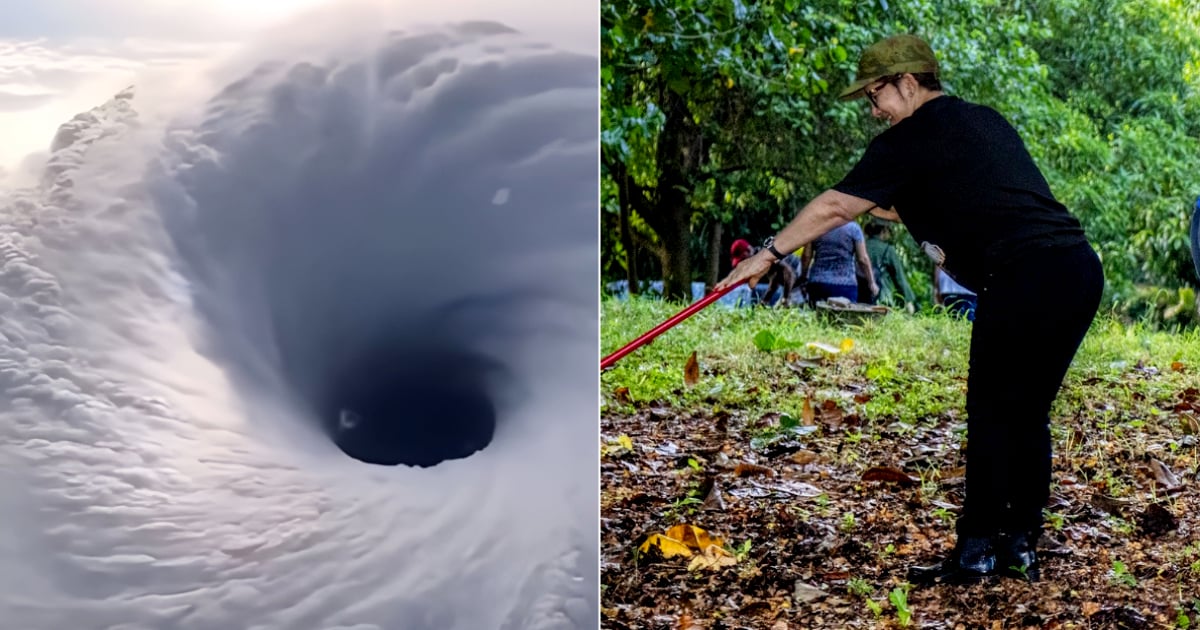
Lis Cuesta Peraza, often referred to as Cuba's "unofficial first lady," has once again found herself at the center of a digital storm. After posting a message on X (formerly Twitter) intended to inspire heroism, she instead incited widespread indignation and sarcasm.
"There's no hurricane stronger than the will of the Cuban people. The East has once again shown who we are: love, courage, and Revolution," wrote Miguel Díaz-Canel's wife, aligning her message with the Cuban Presidency's official account.
This post emerged in the wake of Hurricane Melissa's destruction in eastern Cuba, where countless families are grappling with material losses, diseases, and relentless power outages. In this context, her words were seen as mocking a nation already worn down by hardship.
The Backlash on Social Media
When CiberCuba News shared the story on its Facebook page, the response was explosive, garnering over 2,400 comments in under 24 hours, the majority of which expressed outrage.
The uniformity and volume of these reactions painted a collective picture of how Cuesta Peraza is viewed by many as a symbol of cynicism, hypocrisy, and disconnection from the realities of Cuban power.
Analyzing these reactions reveals a clear pattern: the ire wasn't directed solely at the tweet but at what it represents. Cuesta Peraza, who holds no official title but acts as a de facto "first lady," is seen as a privileged figure unable to empathize with her people's suffering.
Symbol of Disconnect
Many comments reiterated a common sentiment: willpower doesn’t rebuild homes, cure illnesses, or fill empty stomachs. "Talk less about willpower and more about food, medicine, and shelter," one user urged, echoing a widely shared feeling. Another commented with biting sarcasm, "There's no hurricane stronger than you, who've ravaged the entire island for 66 years."
Cuban sarcasm often morphs into political critique: "She's right; if we've survived you, we can survive any hurricane"; "The people have willpower, but you have no shame"; "Tight shoes, stone heart."
From Cultural Figure to Symbol of Frivolity
Originally from Holguín, Cuesta Peraza was a minor figure in the cultural apparatus until her husband's rise to power thrust her into the spotlight, turning her into a symbol of late-stage Castroism's frivolity.
On social media, Cubans compare her to past figures of luxury and excess: "the Imelda Marcos of the Caribbean," "tropical Marie Antoinette," "the shoe-loving Machi."
These labels all convey the same sentiment: contempt for a woman who, from her privileged bubble, seems utterly detached from everyday life.
The Hurricane of Indignation
Repeated comments express a mix of anger, ridicule, and disillusionment: "The strongest hurricane is not Melissa, it's the communism that destroyed Cuba since 1959"; "There's no wind more devastating than your husband"; "She thrives on the people's misery, without shame."
Others mock her style and public role: "Instead of mud, she got smeared with Photoshop"; "First lady of trips, not of the people"; "She has time to pose, not to help."
The absence of defending voices is striking. Among thousands of comments, only a few advised "not to give her fame" or "not to waste time on her." None justified her actions.
A Communication Failure
The 'Cuesta-Melissa' incident starkly highlights the vast gap between official narratives and Cuban reality. While the government attempts to spin tragedy with rhetoric of resilience and unity, citizens perceive these words as insults.
Social media—one of the few spaces where Cubans can freely express themselves—has become the stage for a symbolic rebellion: where humor and indignation replace fear.
One of the most shared comments encapsulates this spirit: "If the people's will were as strong as she claims, you wouldn't still be in power."
The Presidency's attempt to project optimism backfired spectacularly. Instead of reinforcing unity, Cuesta Peraza's intervention amplified disdain. Her every word is now fodder for parody, memes, and ridicule circulating both inside and outside Cuba.
The regime no longer monopolizes narratives; they are dismantled in real-time, comment by comment, by a populace speaking from exhaustion, poverty, and pent-up anger.
In the real Cuba—one not shown on state-run television—the people's will is no longer measured by slogans but by their ability to endure not only natural cyclones but also the political storm that has stifled them for over six decades.
Understanding the Public Outcry Against Lis Cuesta
Why did Lis Cuesta's tweet provoke such a strong reaction?
Lis Cuesta's tweet was seen as tone-deaf and insensitive, given the severe impact of Hurricane Melissa on eastern Cuba. Her message was perceived as an insult to those suffering from the aftermath, highlighting her disconnect from the struggles of ordinary Cubans.
What is the significance of the term "no first lady" in reference to Lis Cuesta?
The term "no first lady" underscores Lis Cuesta's unofficial status, as she holds no formal title but functions as a first lady. This highlights her privileged position and the perception of her as disconnected from the Cuban people's realities.
How did the Cuban public express their discontent?
The Cuban public expressed their discontent through a flood of comments and responses on social media, using sarcasm and humor to critique Lis Cuesta's message and the broader disconnect between the Cuban government and its citizens.