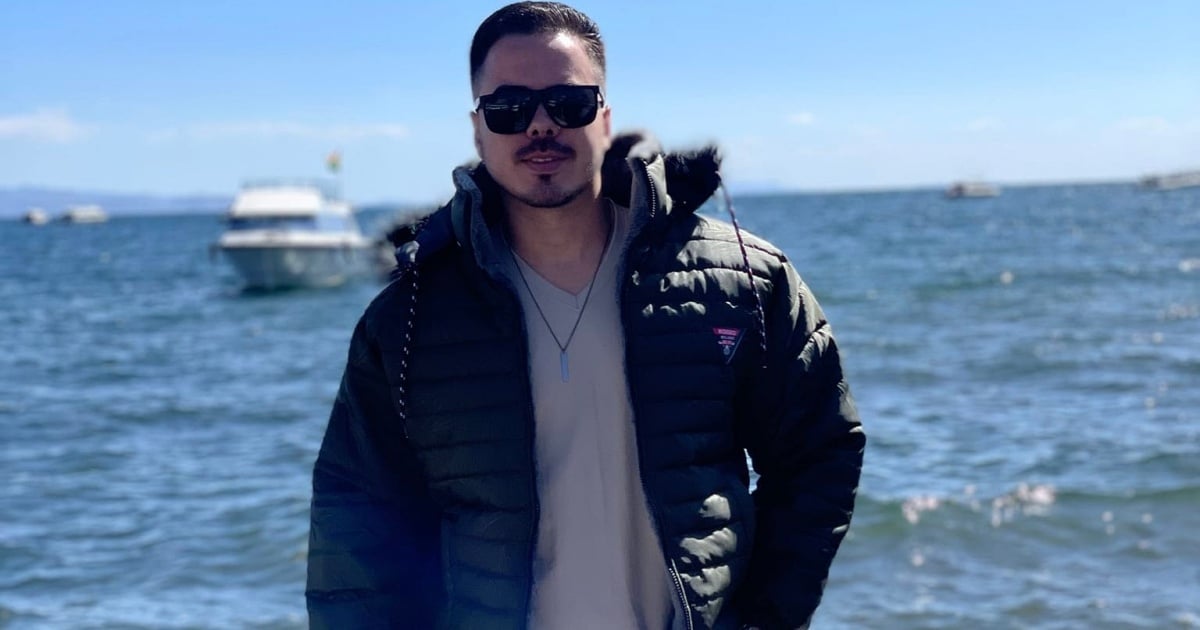
The Cuban activist, Magdiel Jorge Castro, has appealed to Bolivia's new president, Rodrigo Paz Pereira, to reconsider his expulsion from the country. This expulsion was ordered in December 2022 during the administration of former president Luis Arce Catacora and carried out by then Minister of Government, Eduardo del Castillo.
In an open letter from Madrid released on Sunday, Magdiel Jorge Castro highlighted on his X profile that he was forced to leave Bolivia despite having legal residency, with no legal proceedings or accusations against him.
He described the expulsion as a politically motivated decision influenced by external pressures, violating due process, freedom of expression, and the fundamental principles of the rule of law.
Castro explained that on December 19, 2022, he received notification from the General Directorate of Migration regarding Resolution No. SCD-562/22, which mandated his expulsion and banned his re-entry for three years.
The resolution cited an alleged "disturbance of public order" supposedly stemming from his social media posts, yet failed to specify incidents or provide evidence.
He also pointed out that the resolution referenced non-existent clauses of Article 38 of the Immigration Law 370, as well as Articles 37 and Supreme Decrees 1923 and 4574, which he emphasized are procedural, not causal.
Legal Challenges and Government Response
On December 21, Castro filed a Revocation Appeal in Santa Cruz de la Sierra, arguing the lack of cause, absolute absence of motivation, and violation of Articles 13, 14, 21, and 106 of the Political Constitution of the State, along with ruling SCP 0212/2014-S3, which mandates justification for all administrative actions.
In his statement, he insisted there was no public disorder, no criminal record, and that his posts "pertained to Cuban realities, not Bolivian internal politics."
The activist, a prominent critic of the Cuban regime, noted that the revocation was accepted, and the expulsion was initially suspended, acknowledging insufficient grounds.
However, eight days later, on December 29, 2022, he received a new resolution (SCD-589/22), signed in Santa Cruz, reinstating his expulsion and the same entry ban, without new facts or reasoning.
Implications of Political Alignments
"This resulted in a contradictory and illegal act, executed under the directive of then President Luis Arce Catacora and implemented by Minister Eduardo del Castillo," Castro wrote.
The Cuban communicator linked his expulsion to the ALBA-TCP Summit in Havana, attended by Arce and Miguel Díaz-Canel, suggesting his removal was a politically aligned gesture with the Cuban regime, which views him as a critical journalist and opponent.
Castro argued that Bolivia's compliance with foreign censorship was a blow to press freedom and institutional sovereignty in a country known for its openness and plurality.
Human rights organizations, including Amnesty International, and the Defensoría del Pueblo, have highlighted the arbitrary nature of his case, warning it sets a dangerous precedent for foreign journalists and activists.
A Call for Justice and Reconciliation
The activist, who faced threats from the Bolivian government, noted that the entry ban expires in December 2025, and clarified that his appeal is not for material restitution but for "a symbolic and moral act of reparation."
"My expulsion, Mr. President, affected not only me personally but also the image and institutional prestige of Bolivia, by aligning its migration apparatus with a foreign government's political decision," he stated.
In his letter, he urged the current administration to publicly acknowledge the arbitrariness of the measure and to officially review resolutions SCD-562/22 and SCD-589/22, not as a mere formality, but as "an act of justice reaffirming Bolivia's commitment to freedom of expression, due process, and human dignity."
He recalled his legal residence, work, and the warm welcome he received from the generous Bolivian people.
"This request stems from respect, gratitude, and love for a country I have always admired, trusting it will rectify what should never have happened," he expressed.
Currently residing in Spain, Castro believes that an act of recognition and correction from the Bolivian government would be "a hopeful sign for the Cuban community in Bolivia seeking refuge from dictatorships, and for all journalists who still believe in the power of truth."
He concluded his letter by wishing success to the new Bolivian leader and reiterating his trust that reviewing his case "will honor the democratic memory of the country and strengthen its moral leadership in the region."
Understanding the Cuban Activist's Expulsion from Bolivia
Why was Magdiel Jorge Castro expelled from Bolivia?
He was expelled due to alleged "disturbance of public order" from his social media posts, although no specific incidents or evidence were provided. The expulsion was seen as politically motivated under external pressure.
What legal actions did Castro take against his expulsion?
Castro filed a Revocation Appeal in Santa Cruz de la Sierra, challenging the lack of cause, absence of motivation, and violations of constitutional articles and administrative law.
What are the broader implications of Castro's expulsion?
The expulsion is viewed as a significant threat to press freedom and sets a dangerous precedent for foreign journalists and activists in Bolivia, aligning with foreign censorship practices.
What does Castro seek from the new Bolivian president?
He seeks a public recognition of the arbitrariness of his expulsion and an official review of the resolutions, as a gesture of justice affirming Bolivia's commitment to freedom of expression and due process.