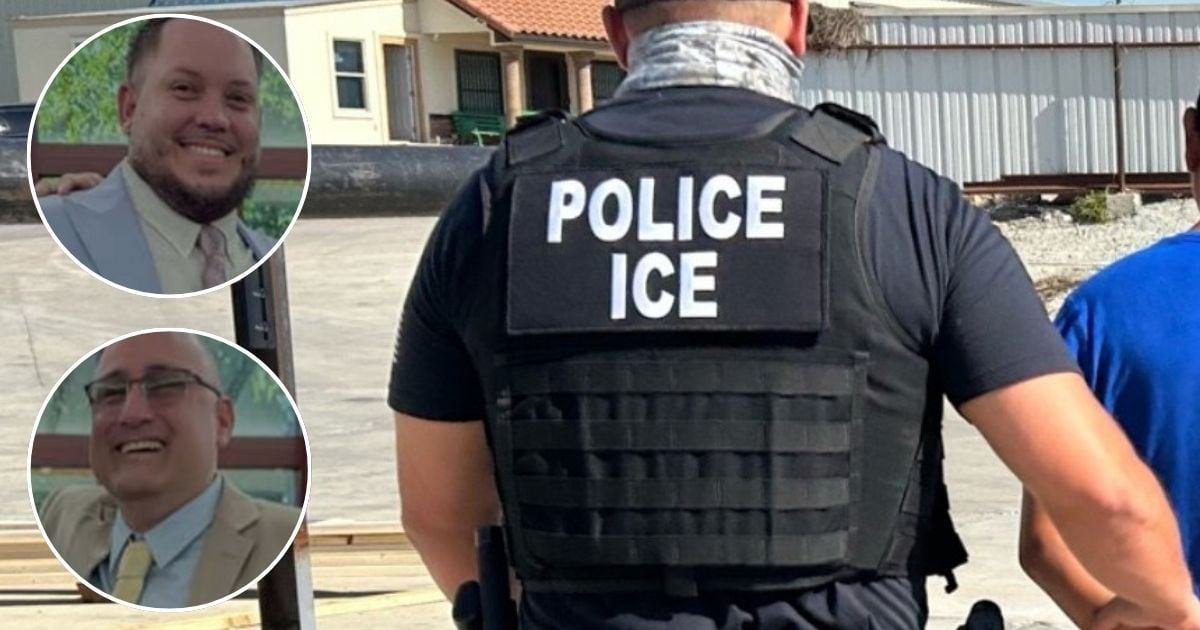
Alcibiades Lázaro Ramírez González and Yannier Vázquez Hidalgo had envisioned a fresh start in the United States, away from the homophobia and oppression that defined their lives in Cuba. Having been together for years, they tied the knot in a modest courthouse ceremony in Clay, Northern New York, surrounded by family who celebrated their love and newfound stability in a nation they hoped would be their sanctuary.
Merely two months into their marriage, the couple was apprehended by agents from the U.S. Immigration and Customs Enforcement (ICE) and sent to a detention facility in Batavia, with deportation to the very island they escaped from looming over them.
Arriving in the U.S. between 2021 and 2022, both men were employed at the State University of New York (SUNY) Upstate Medical University, with Yannier working as a janitor and Alcibiades as a supervisor. They were recognized among colleagues as dependable and discreet, having integrated into the community and even purchasing a home in North Syracuse.
Without any criminal records or legal infractions, the couple had successfully passed immigration interviews, evidencing a credible threat to their lives if they were to return to Cuba. In late October, they attended what they believed would be their final immigration appointment in Mattydale, expecting to receive permanent residency approval in the U.S.
However, instead of a routine procedure, they were unexpectedly detained and transported to Batavia, leaving their car abandoned in the parking lot. A coworker retrieved the vehicle and informed their families of the situation.
The incident quickly spread among friends and colleagues, mobilizing their families to seek assistance from state officials. On November 1st, during a political event in Syracuse, New York Governor Kathy Hochul privately met with the families and union representatives of the couple. She pledged to help them secure legal representation and voiced her concern over the arbitrary detention of individuals contributing to American society for years.
"We live in perilous times when those who have worked and resided here for years are treated as criminals," Hochul stated, referring to the new wave of deportations under President Donald Trump's policies.
Since the Republican's return to the White House, his administration has escalated ICE operations, particularly in northern states. Numerous immigrants have been detained during workplace raids or routine immigration appointments.
The government's rhetoric, focusing on "cleaning the country" of undocumented individuals, has reignited fear among migrant communities who believed their asylum applications provided protection.
Alexeis Ruiz Batista, Alcibiades' cousin, traveled with other family members to see them in Batavia and offer support. "We told them that many people are trying to help them. They are not alone. Trust in God, and everything will be alright," he shared with Syracuse.com, a news website serving central New York.
Yannier's brother-in-law, Juan Carlos, recounted the harassment and brutality they faced in Cuba, warning that their lives are at risk if sent back. "There is no protection or justice for them there. They would be targets of persecution," he stated.
According to their families, the U.S. government has not clarified the reasons for their detention or their current legal status. Both remain confined together in a cell, awaiting their scheduled hearings.
Yannier is due to appear on November 17th at 8:30 a.m., while Alcibiades' hearing date is yet to be determined.
The case has sparked concern in New York, prompting organizations and unions to demand their immediate release. To many, this Cuban couple's story underscores the contradiction between the freedom the U.S. purports to offer and the immigration policies that now threaten those seeking that very freedom.
Understanding the Risks for Cuban Asylum Seekers in the U.S.
What led to the detention of the Cuban couple by ICE?
The couple was detained by ICE during a routine immigration appointment, despite having no criminal records and having passed necessary interviews demonstrating a credible threat if returned to Cuba.
How has the community reacted to their detention?
The community, including family, friends, and colleagues, has rallied to support the couple, seeking assistance from state authorities and urging their release.
What are the potential consequences if the couple is deported back to Cuba?
Deportation could put the couple's lives at risk due to past harassment and brutality they faced in Cuba, where they would likely be targets of persecution.