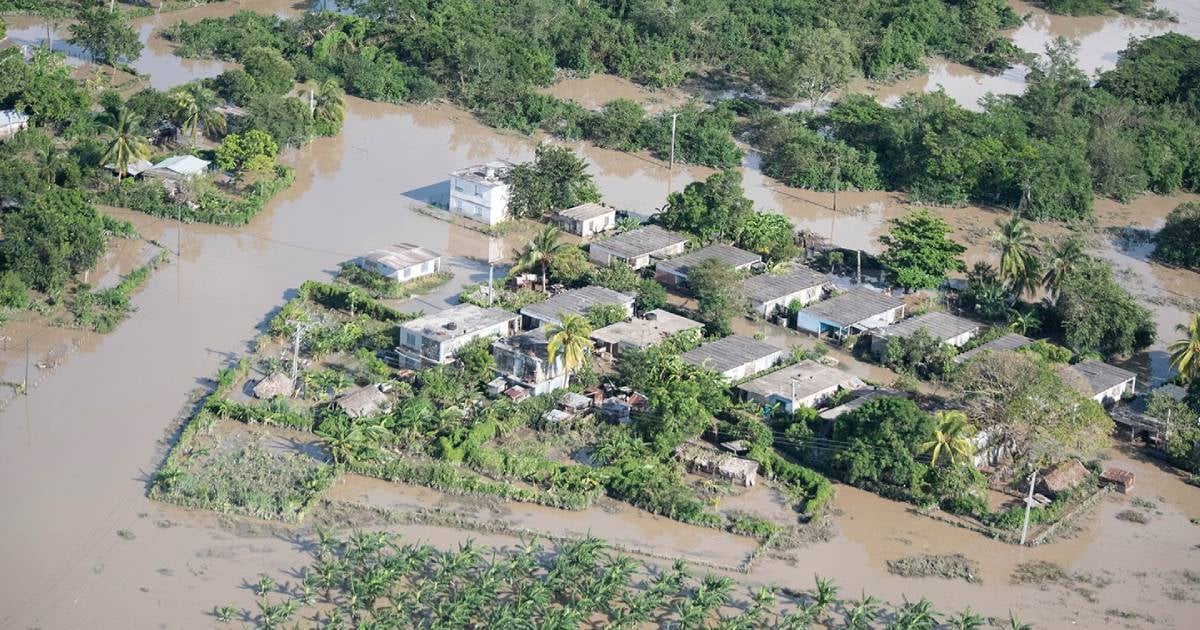
As countless families in eastern Cuba struggle to rebuild following the catastrophic impact of Hurricane Melissa, the state-run newspaper Granma has chosen to point fingers at the exile community and independent media, accusing them of fostering "hatred" and "discontent" amidst the devastation.
In a piece titled "Haters Without Rescue," author Francisco Arias Fernández accuses "cyber terrorists employed by Marco Rubio" and Cubans in Miami of inciting social media and public unrest with "slander, false rumors, and calls for uprising," while also blaming them for advocating for "U.S. military intervention."
The article claims that Cuban emigrants "encourage disobedience and fear" as the nation grapples with the cyclone's aftermath. Fernández asserts that these "haters" revel in others' suffering and aim to "tarnish Cuba's image," disregarding the alleged "heroic acts" of the authorities and citizens.
Contradictory Narratives EmergeHowever, the official narrative starkly contrasts with firsthand accounts from the affected regions and the wave of solidarity from the Cuban diaspora, documented in recent days.
From Miami, Tampa, and Madrid, Cuban expatriates have organized collections of food, medicine, and essential items to send to the hardest-hit provinces—Holguín, Granma, Las Tunas, and Santiago de Cuba.
Several business leaders and artists have publicly pledged donations and humanitarian flights, while others launch social media campaigns supporting those affected by the disaster.
Independent Reports Reveal Harsh RealityOn the island, independent reports depict a harsher reality: families who lost their homes sleep outdoors, entire communities remain isolated for days, and widespread complaints persist about the lack of government assistance. "No one has come," stated a resident of Mayarí, pointing to the remnants of her wind-ravaged home.
In stark contrast to the Communist Party's triumphant narrative, Cubans both at home and abroad have shown that genuine solidarity stems from empathy, not slogans. Amid the crisis, grassroots efforts and diaspora initiatives have become the sole lifeline for countless families still awaiting official aid.
Granma's Blame Strategy Draws CriticismGranma's strategy of blaming the exile community and downplaying the tragedy has sparked criticism even within Cuba, where many question the regime's persistent focus on external scapegoats instead of acknowledging the structural failures that exacerbate each natural disaster.
Meanwhile, images emerging from eastern Cuba—roofs torn off, barefoot children in the mud, elders cooking with firewood—highlight a truth that no partisan editorials can hide: the Cuban people continue to endure, not because of the regime's power, but despite it.
Understanding the Role of the Cuban Exile Community
How has the Cuban exile community responded to Hurricane Melissa?
The Cuban exile community has organized food, medicine, and essential supply collections from cities like Miami, Tampa, and Madrid to aid the regions hardest hit by Hurricane Melissa.
What accusations have been made by state media against the exile community?
State media has accused the exile community of inciting hatred and unrest through false rumors and calls for uprising, while also alleging that they seek U.S. military intervention in Cuba.
What is the significance of the independent reports coming from Cuba?
Independent reports provide a more accurate depiction of the challenges faced by those affected by the hurricane, contrasting the official narrative by highlighting the lack of adequate government response and the critical role of citizen-led initiatives.