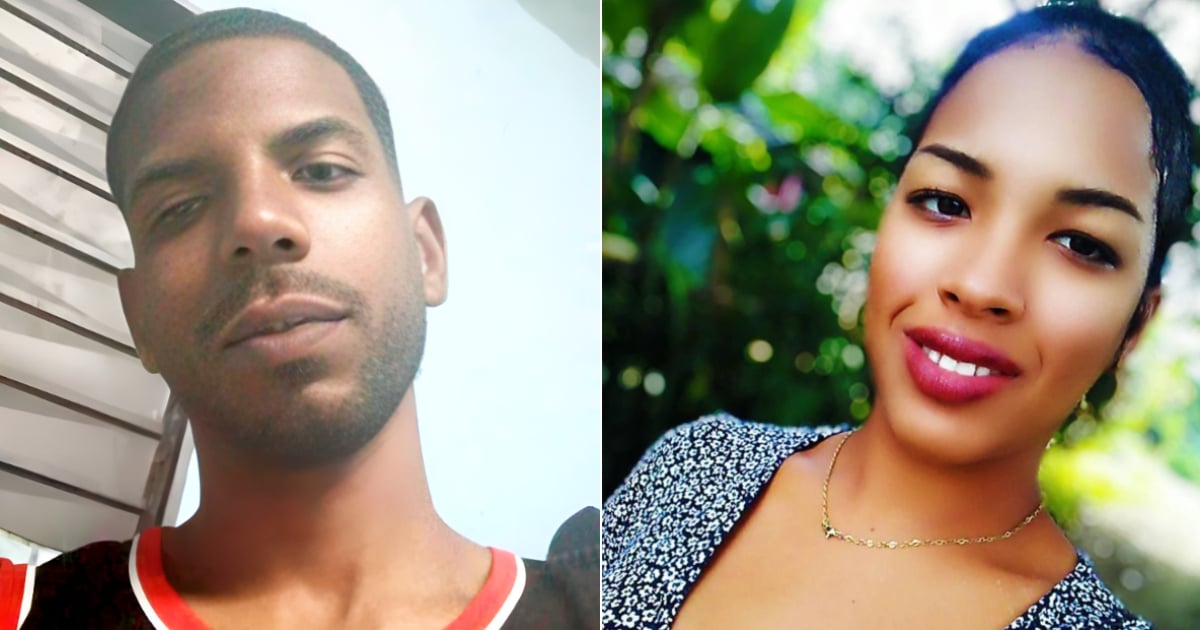
The academic community in Santiago de Cuba is once again enveloped in sorrow following the tragic passing of two young members from the University of Oriente (UO), barely a day after a similar announcement was made by the institution itself.
This time, the loss includes Raudel de Armas Louis, a dedicated professor in the Department of Biology and secretary of the Union of Young Communists (UJC) Committee at the Faculty of Natural and Exact Sciences, along with a second-year student in Sociocultural Management for Development from the San Luis Municipal University Center (CUM).
The university, through its social media channels, revealed that De Armas Louis was hospitalized and passed away early Friday morning despite medical efforts. The death of the 24-year-old has deeply affected both colleagues and students, who fondly remember him as a passionate educator committed to his teaching mission.
Just hours later, the San Luis CUM confirmed the death of student Beatriz Carmenaty Corona, aged 22. According to the UO’s announcement, she suffered from a chronic illness compounded by cardiovascular complications, leading to her demise.
Her peers and professors described her as a cheerful and dedicated young woman who bravely battled her condition.
"Gray days for the University of Oriente," lamented the institution in a condolence message shared online, where hundreds expressed their grief and solidarity with the families and friends of both young individuals.
These recent deaths add to a series of losses that have struck the University of Oriente in recent weeks, including that of Professor Pedro Antonio Rodríguez Fernández from the Faculty of Chemical Engineering and Agronomy, and student Luis Enrique Vicet Castellanos from Mechanical Engineering.
The series of fatalities has sparked concern and sadness within the eastern academic circles, as many educators and students express the physical and emotional toll they endure amidst the dire living conditions, lack of resources, and challenges of the Cuban healthcare system.
The institution reaffirmed its commitment to support the families and honor the human and professional legacy of its departed members.
Health Crisis Impacting Universities
The recent deaths at the University of Oriente occur amid a severe epidemiological crisis affecting Cuba since mid-2025, with simultaneous outbreaks of dengue, chikungunya, and Oropouche virus across several provinces, including Santiago de Cuba.
The Ministry of Public Health (MINSAP) has acknowledged the spread of these mosquito-borne diseases, although independent organizations and sector professionals warn that the actual numbers of infections and deaths could be much higher than the official reports. In just one week in October, over 13,000 unspecified febrile cases were recorded, highlighting the magnitude of the problem.
The deterioration of the healthcare system, lack of medications, scarcity of diagnostic reagents, and ineffective fumigation campaigns have worsened the situation.
In many eastern communities, residents report that mosquito breeding sites are multiplying amid piles of garbage and stagnant water, while hospitals operate with minimal resources and exhausted staff.
In this context, the recent deaths at the UO not only underscore the vulnerability of the Cuban health system but also reflect the impact of the epidemiological crisis on young individuals and professionals actively engaged in academic pursuits.
Although there has been no official confirmation linking the causes of death to dengue or other arboviruses, the rise in fatalities and severe cases in educational and workplace settings is causing concern among families and colleagues.
The health situation adds to the social discontent over the regime's lack of transparency in handling epidemiological data and its refusal to declare a national emergency, despite the demands from medical and social organizations.
In Santiago de Cuba, where the UO is located, reports of febrile cases, hospitalizations, and sudden deaths have increased alarmingly, painting a picture of exhaustion and vulnerability that extends into academic spaces.
The deaths of young and university faculty members thus occur within a broader context of health and social crisis, exposing the structural deficiencies of the Cuban system and the human cost of its prolonged decline.
FAQs on the Health Crisis and University Losses
What factors are contributing to the health crisis in Cuba?
The health crisis in Cuba is exacerbated by outbreaks of diseases such as dengue, chikungunya, and Oropouche virus, combined with a deteriorating healthcare system, lack of medications, and ineffective disease control measures.
How is the University of Oriente dealing with recent losses?
The University of Oriente is expressing condolences and solidarity with the families, reaffirming its commitment to support them and honor the legacy of the deceased members.
Why are recent deaths at the University of Oriente causing concern?
The recent deaths are concerning because they highlight the physical and emotional toll on students and staff amid the country's health crisis, and raise questions about the adequacy of health measures in educational settings.
What role does the lack of transparency play in Cuba's health crisis?
The lack of transparency in reporting and handling epidemiological data has fueled social discontent and hindered effective responses to the health crisis, as official figures may not reflect the true scope of the situation.