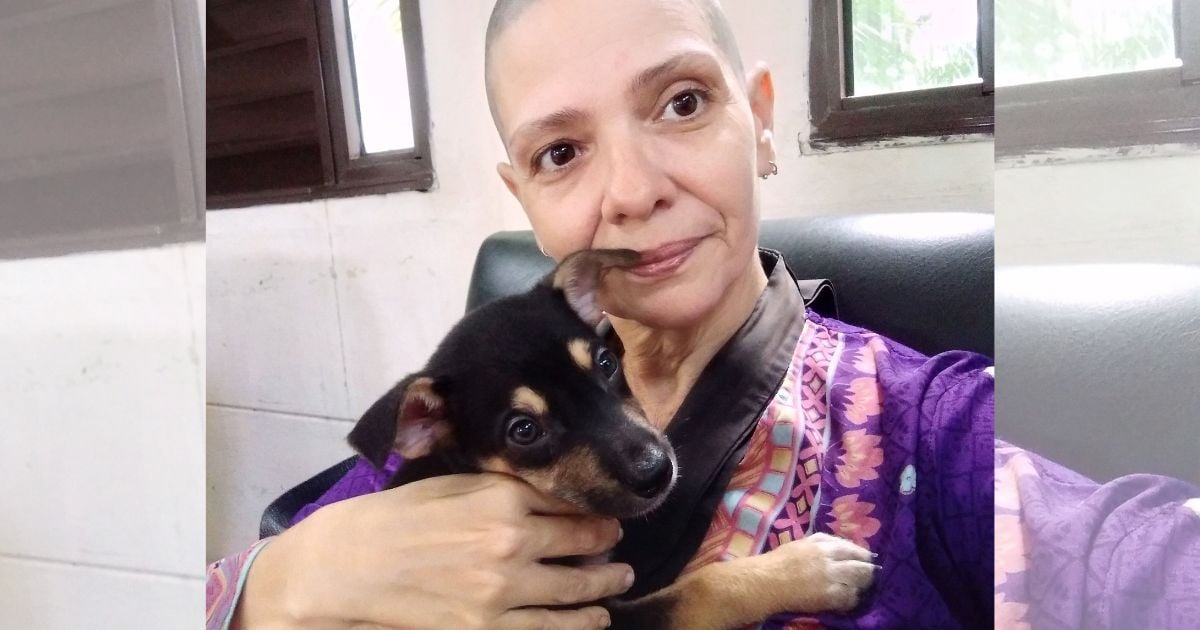
This past Thursday, Cuban author Adriana Ryukiyoi Normand shared a detailed account of her battle with chikungunya, a mosquito-borne illness that has rapidly spread across Cuba. Her testimony highlights a discrepancy between the official media reports and the reality she perceives, suggesting that the disease has impacted far more individuals than the government admits.
"Today marks my 12th day of dealing with chikungunya or whatever it is I have, and my energy is still quite low," begins her candid Facebook post. She openly discusses the overwhelming exhaustion and physical decline she has experienced as a result of the illness.
While official sources claim that 20,000 people have sought hospital care due to the disease, Normand boldly challenges this figure. "I highly doubt this number. I would venture to say it’s not in the thousands anymore but rather in the millions," she wrote, challenging the regime’s narrative.
Prevented from leaving the country by the regime in 2024, Normand observes that the outbreak's severity is evident in daily life. "Entire provinces are filled with sick people, whole families, blocks, and neighborhoods overflowing with cases. You don't need a degree in Mathematical Cybernetics to do the math," she remarked, pointing to the overwhelmed healthcare system and lack of transparency regarding the epidemiological situation.
The author shares a vivid portrayal of the symptoms she has endured for nearly two weeks: a prolonged fever, pain in her eyes, temples, jaw, and joints, along with swollen gums, stomach discomfort, and a rash causing severe itching. "The itching on my feet is still intense and particularly bothersome at night," she noted.
Adding to these afflictions are persistent fatigue and muscle aches. "The sensation I have is, as a meme puts it, like being run over by a truck. Not the largest truck, perhaps, but certainly a persistent one. Sometimes I feel out of my body, almost drowsy, then I move, and the pain reminds me I’m still here," she admitted.
Despite describing her case as "mild" compared to others, Normand acknowledges the slow recovery process and warns that any physical exertion can worsen the symptoms. "Don’t start exerting yourself thinking you’re cured, because your body will take note and charge you later," she advised those undergoing similar struggles.
In her post, the writer also contemplates the emotional insights gained through the illness: "I take a deep breath and am grateful for understanding through this sickness that I am not alone in the world and that impermanence is the only constant."
In recent weeks, the regime has admitted a rise in cases of chikungunya and dengue, both spread by the Aedes aegypti mosquito. However, Cuban health authorities have downplayed the severity, maintaining statistics that many citizens find implausible.
The outbreak comes amid a profound health crisis, characterized by a shortage of medications, inadequate fumigation efforts, and a deteriorating hospital infrastructure. Residents in neighborhoods of Santiago de Cuba, Holguín, Camagüey, and Havana report streets flooded with garbage and a lack of vector control initiatives.
Understanding the Chikungunya Outbreak in Cuba
What are the main symptoms of chikungunya?
The primary symptoms of chikungunya include prolonged fever, joint pain, headaches, muscle pain, and a rash that causes severe itching.
Why does Adriana Ryukiyoi Normand doubt the official figures?
Normand believes the real number of affected individuals far exceeds the official reports, estimating the cases in the millions rather than the thousands.
How is the Cuban healthcare system coping with the outbreak?
The healthcare system is struggling, marked by a shortage of medications, lack of fumigation, and decaying hospital facilities, complicating the response to the outbreak.