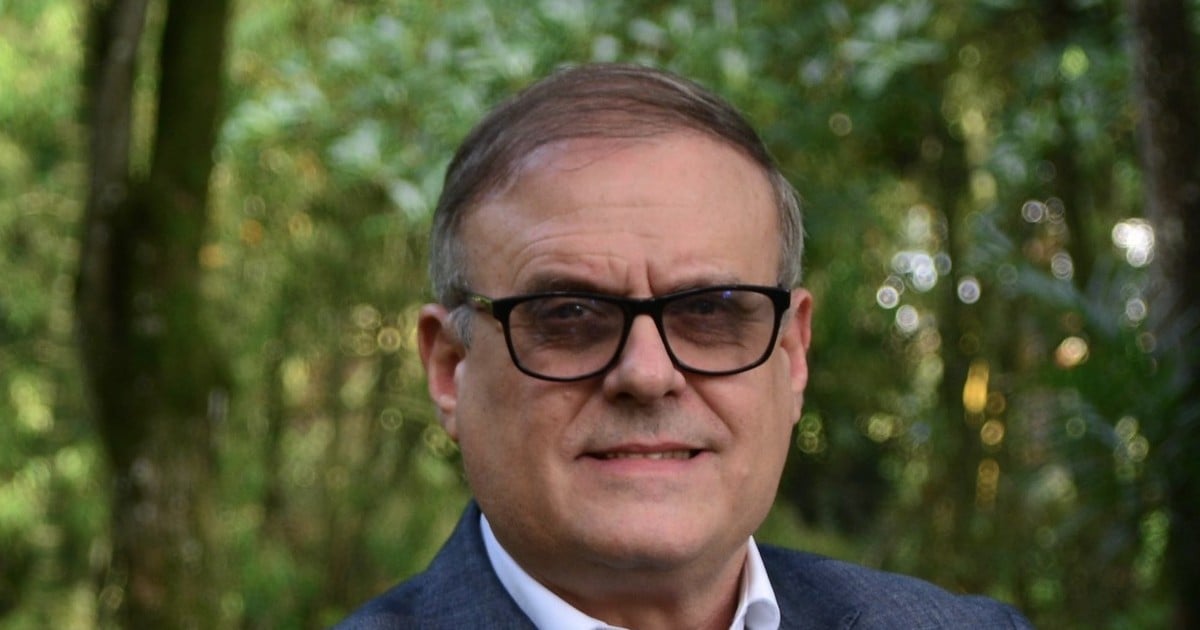
The Cuban economist, Mauricio De Miranda Parrondo, has issued a scathing statement calling for the immediate resignation of Miguel Díaz-Canel, Prime Minister Manuel Marrero, and the entire government leadership. He holds them accountable for the nation's economic, social, and moral crisis.
This declaration, articulated via Facebook, follows a message from Laura María Gil González demanding transparency in the case of her father, former Economy Minister Alejandro Gil, who faces serious charges including espionage, embezzlement, bribery, and money laundering.
Mounting Pressure for Government Accountability
"Mr. President: resign. Prime Minister: resign." This is the demand made by De Miranda Parrondo, who, despite being a long-standing critic of Alejandro Gil's management, now shifts attention to the core of power that shielded him.
"I have criticized Alejandro Gil's administration, not solely for his actions, but because of the system he represented, which remains rigid, oppressive, and incapable of addressing the people's needs with dignity," he wrote.
The economist drew parallels between Cuba's situation and Vietnam, recalling how in 2023, former President Nguyen Xuân Phúc stepped down following corruption scandals within his government, despite his lack of direct involvement.
"He had the decency not to cling to power," De Miranda emphasized, directly challenging Díaz-Canel.
A Call for Leadership Change
Building on this comparison, he delivered his most forceful message: "Mr. Díaz-Canel: How can someone you dismissed with gratitude for their service be not only corrupt but also a spy? If this is true, what is your responsibility? Mr. Marrero: How could the Deputy Prime Minister and Minister of Economy be accused of espionage right under your nose, and you be unaware? You are responsible for this," he detailed.
De Miranda's unprecedented call from a Cuban academic concluded with a bold exhortation: "President: resign. Prime Minister: resign. Lawmakers: convene a freely elected Constituent Assembly and then resign as well. You are not the solution; you are the problem. It's because of you that we are where we are."
A Broader Critique of Economic Sanctions
While De Miranda maintains a critical stance towards the government, he clarifies that this does not equate to support for U.S. economic sanctions, which he vehemently opposes. However, he asserts that the primary blame for Cuba's downfall lies with the internal leadership's incompetence.
"My words will never overlook the harmful effects of the sanctions, but you are the main culprits of the country's debacle. And out of shame, you should leave," he stressed.
Breaking the Official Narrative
De Miranda's statement emerges amidst a political storm in Havana. Alejandro Gil's daughter, a former official at the Ministry of Foreign Trade (MINCEX), broke her silence and challenged the Prosecutor's official narrative, demanding an "open and televised" trial.
Laura Gil calls for clarity regarding the alleged involved countries and specific accusations. Her demand is remarkable in the Cuban context, where censorship, fear, and lack of access to information are prevalent.
In contrast, the former minister's sister, María Victoria Gil, expressed from the Canary Islands feeling "hurt and ashamed" and insisted that if her brother's guilt is proven, "the full weight of the law should fall upon him."
Political Crisis and Eroding Trust
The case of Alejandro Gil has triggered a political earthquake. For the first time in years, a voice close to the government openly questions the State's narrative. Now, a Cuban economist of international repute breaks diplomatic caution to demand the complete resignation of the leadership.
Analysts suggest that De Miranda's text is not merely a moral critique but a diagnosis of the country's institutional collapse, where corruption, repression, and inefficiency have eroded what little remained of official credibility.
The economist also references the Stalinist trials in Moscow from 1936 to 1938 to caution about the parallels between the political trials then and the current accusations in Cuba:
"In Moscow, thousands of revolutionaries were condemned for false crimes. In Cuba, it's not about that: these corrupt individuals are not revolutionaries. Neither Gil, nor those accusing him, nor those currently leading suffering Cuba."
A Plea for Shame and Responsibility
De Miranda's message has gained significant traction on social media, shared by hundreds within and outside the Island. His call for the governing elite to resign echoes what many citizens feel: that Cuba's leadership has lost all moral legitimacy.
Meanwhile, thousands of Cubans remain trapped in a worsening crisis, facing rampant inflation, frequent power outages, wages insufficient for basic food, and a mass exodus emptying the streets.
In the midst of this bleak outlook, the economist's words capture the collective frustration: "You all lack the capability to pull our country out of the dire crisis we are in. You are not the solution; YOU ARE THE PROBLEM. It's because of you that we are where we are."
Understanding Cuba's Political Turmoil
Why is Mauricio De Miranda Parrondo calling for the resignation of Díaz-Canel and other leaders?
De Miranda Parrondo holds Díaz-Canel, Manuel Marrero, and other leaders responsible for the severe economic, social, and moral crisis in Cuba. He believes their leadership is the root cause of the country's current problems.
What are the allegations against former Economy Minister Alejandro Gil?
Alejandro Gil has been charged with serious offenses, including espionage, embezzlement, bribery, and money laundering.
How has the Cuban public reacted to these developments?
The Cuban public, especially on social media, has widely shared De Miranda's call for leadership change, reflecting a deep-seated frustration with the government and a loss of trust in its moral legitimacy.