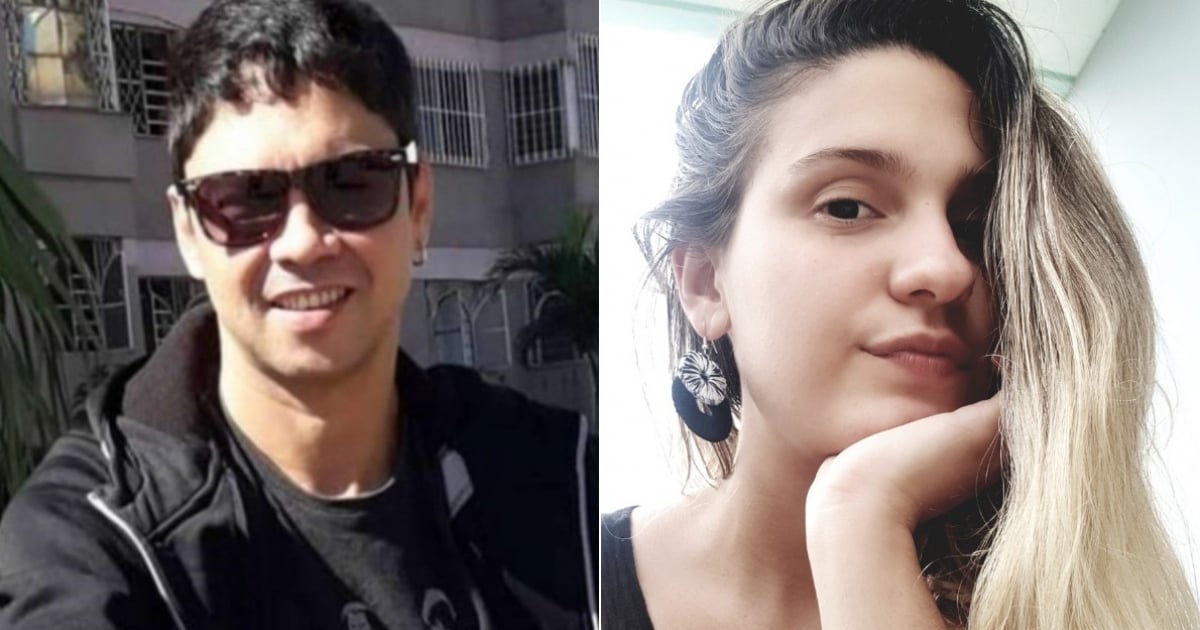
Cuban actor and playwright Yunior García Aguilera has responded to the unexpected public statement made by Laura María Gil González, the daughter of former minister Alejandro Gil, who demanded transparency and called for an "open-door trial."
"Gil's daughter has broken her silence. And in Cuba, that's no small feat," Yunior García wrote on his Facebook page while discussing the three posts the ex-minister's daughter shared on social media. According to García, these posts have made several bureaucrats uneasy.
García dissected the young woman's actions, analyzing her carefully measured irony and her way of speaking, which, he notes, is learned only by living under a dictatorship.
To the activist, Laura's text is an example of what he calls "self-censored speech": statements crafted to satisfy the censors while still conveying a message that the people can clearly understand.
"It's the typical language of those accused (or their families) in dictatorships, a form of communication inherited from Stalin's trials where loyalty had to be demonstrated even when facing the gun. This is also known as 'language of forced submission' or 'speech of feigned obedience,'" Yunior detailed.
"Those of us who have lived under a totalitarian regime recognize it immediately. You say one thing so the censor won't punish you, and another so the people understand what you truly mean. And she has done it 'by the book,'" the artist stated.
In his view, the young woman's statement is not only an act of daughterly devotion but also a desperate and brave gesture deserving of respect.
Laura Gil's Demands and Why They Rattle the Authorities
In her posts, Laura María Gil González called for greater transparency regarding the accusations of espionage, embezzlement, and other charges against her father. She cited constitutional articles that uphold freedom of expression and the defense of honor.
She insisted that the trial be held "open to the public" and broadcast, demanding clear information about the alleged countries and incidents involved in the charges.
The gesture is unusual: it comes from someone who was part of the institutional framework—until recently, a specialist in the MINCEX Import Department—who had previously avoided politicizing her public persona.
For the daughter of a former high-ranking official to break her silence and question the official statement from the Prosecutor's Office signals a fracture within the circles close to power.
Government Response: Mixed Reactions
Laura's announcement occurs against a backdrop of high tension. The Prosecutor's Office has charged Alejandro Gil with serious crimes—including espionage, embezzlement, bribery, and money laundering—and independent media sources report that the prosecution is seeking a life sentence.
Official responses and family reactions have been discordant.
From the Canary Islands, the ex-minister's sister, María Victoria Gil, expressed feeling "hurt and ashamed," stating that if Alejandro Gil has betrayed his principles, he deserves the full weight of the law to fall upon him.
Concurrently, the government has promoted the hashtag #CeroImpunidad, with Communist Party leaders supporting punitive measures against corruption.
The Political Implications of "Self-Defense Language"
According to Yunior García, beyond the specific content of Laura's questions, the value of her message lies in its form: speaking from within using codes the regime understands while simultaneously activating critical reading among the populace.
This rhetorical tool, he explains, has been a survival mechanism for countless Cubans who have had to say what is necessary to avoid punishment while hinting at what they truly think.
García interprets the gesture as a clear signal that "the old structure is crumbling, even if it is falling slowly." In other words, the facade of unity and control projected by the elite is cracking as dissenting voices emerge, even among close circles.
Risks, Reprisals, and the Myth of Selective Transparency
Laura's statement also highlights a systemic contradiction: while the regime proclaims legal procedures and transparency, its history shows opacity, closed processes, and the political use of judicial mechanisms.
Calling for a public trial in an environment where censorship and information control are the norms is, in addition to a demand for justice, a provocation that could endanger the author and her family.
In practice, the state has administrative, judicial, and security tools to contain or crush such internal challenges.
What Does This Mean for the Regime's Stability?
The case of Alejandro Gil—a once-prominent figure in economic policy—and his daughter's public reaction open several lines of tension: internal dissent within the nomenclature, public narrative control policies, and the fragility of a system that relies on authoritarian management and personal loyalty.
For a figure linked to the apparatus to demand an "open and televised" process not only underscores the need to prove the innocence or guilt of the accused but also highlights the battle over who controls the public truth: who informs, how information is shared, and for what purposes.
The young woman's gesture—a dissenting voice within the elite—reveals cracks in the official discourse, exposing the tension between the regime's control rhetoric and public demands for accountability.
Laura María Gil's public appearance and Yunior García's critical interpretation illuminate what many were already whispering: the official narrative of absolute control has fissures.
For the daughter of a former minister to request transparency and public scrutiny over a highly resonant political case is more than just a familial plea; it's a rupture that could widen if others within the power circle begin to question the opacity of the proceedings.
In a country where public management is intertwined with personal survival, Laura's request serves as a mirror reflecting a fundamental question: who decides what is said, what is silenced, and whom the system protects when someone from its own ranks falls?
Impact of Laura María Gil's Statement on Cuban Society
What prompted Laura María Gil to make her public statement?
Laura María Gil made her public statement to demand transparency and an open-door trial for her father, Alejandro Gil, who faces serious charges, including espionage and embezzlement.
How did Yunior García react to Laura María Gil's message?
Yunior García praised Laura's message for its bravery and effectiveness, describing it as a classic example of "self-censored speech" that communicates more than it overtly states.
What are the possible risks for Laura María Gil after her public declaration?
Laura's demand for a public trial poses a risk in a regime where censorship and control are prevalent, potentially endangering her and her family.