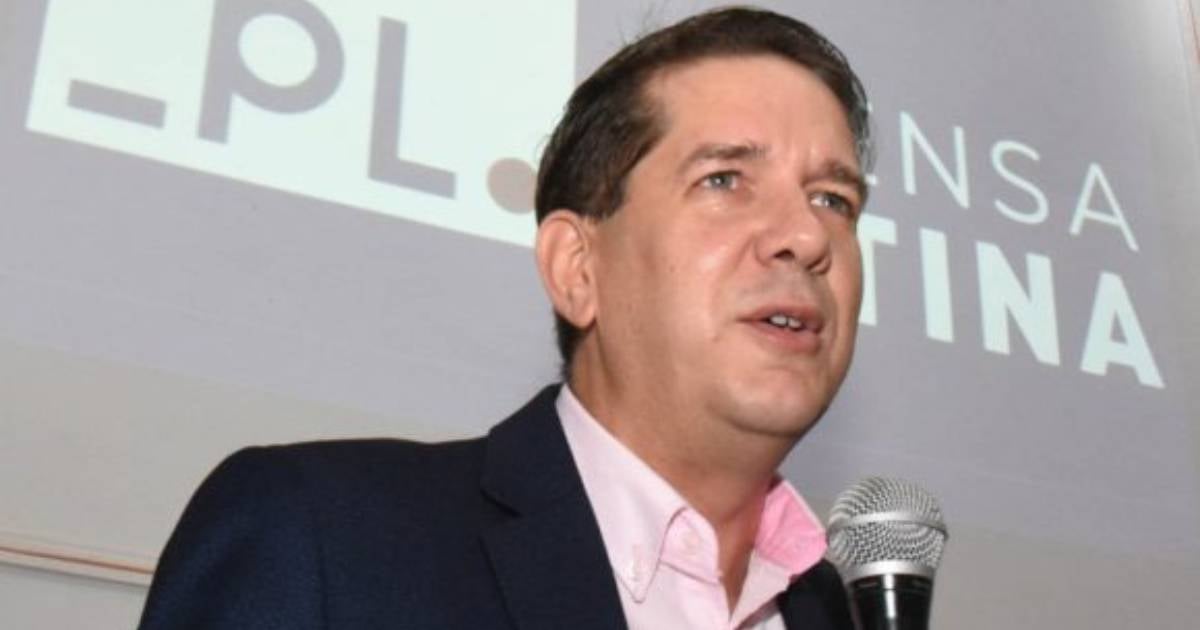
Jorge Legañoa Alonso, a well-known figure in Cuban state media circles, has been appointed as the new president of the Latin American News Agency, Prensa Latina. This decision, made public by state media on October 15, appears to reward one of the leading voices in the campaign to discredit opposition leader José Daniel Ferrer. Legañoa has publicly labeled Ferrer as "violent," a "criminal," and a "mercenary."
Just days earlier, Legañoa made a prominent appearance on Cuban television, dedicating several minutes to portraying Ferrer as an ordinary criminal. This broadcast followed Ferrer's release and deportation to the United States. "In Cuba, he has a long record of violent acts against those around him, including former partners and some associates in his counterrevolutionary activities," the journalist declared on a news segment, further asserting that the dissident "profits from the anti-Cuban business in Miami" and "receives funding from the U.S. government."
As the newly appointed president of Prensa Latina, Legañoa went as far as to accuse Ferrer of "mercenarism," a common accusation from the regime against those who challenge its power. "The anti-Cuban business in Miami is very lucrative. People make good money shouting against Cuba and doing nothing," Legañoa stated during his television commentary, showing selected images and testimonies of Ferrer prepared by official press sources.
Symbolic Appointment Reflects Political Motives
Prensa Latina presented Legañoa's appointment as a career advancement, highlighting his "revolutionary career" and his role in "defending the truth against media campaigns against Cuba." A journalism graduate from the University of Havana, Legañoa has held positions within the Institute of Information and Social Communication, the Central Committee of the Communist Party, and the Union of Cuban Journalists (UPEC), organizations directly under political control.
However, his selection to lead the agency seems strategically timed, especially given that the regime often rewards those who effectively execute its agenda of discrediting activists, dissidents, and independent journalists. In the current climate, controlling information has become a priority for Havana.
Founded in 1959, Prensa Latina was established with the explicit goal of "challenging the hegemonic narrative of major information monopolies." For over six decades, the agency has served as an international platform for official propaganda, promoting the regime's version of internal affairs and justifying repression under the guise of "defending the revolution." According to official figures, its daily output consists of about 300 materials from 39 offices worldwide, perpetuating the single narrative: omitting critical voices and amplifying the government's version of events.
In this context, Legañoa's promotion symbolizes the continuation of journalism subordinated to political power.
Exploring the Implications of Media Control in Cuba
Why was Jorge Legañoa Alonso appointed as president of Prensa Latina?
Jorge Legañoa Alonso was appointed as president of Prensa Latina seemingly as a reward for his active role in discrediting opposition leader José Daniel Ferrer, aligning with the regime's agenda to control media narratives.
What role does Prensa Latina play in Cuban media?
Prensa Latina functions as a major propaganda outlet for the Cuban regime, promoting the government's narrative on domestic issues and justifying repression as a defense of the revolution.
How does the Cuban regime control information?
The Cuban regime controls information by rewarding journalists who support its narrative, using state media like Prensa Latina to broadcast propaganda, and suppressing dissenting voices.