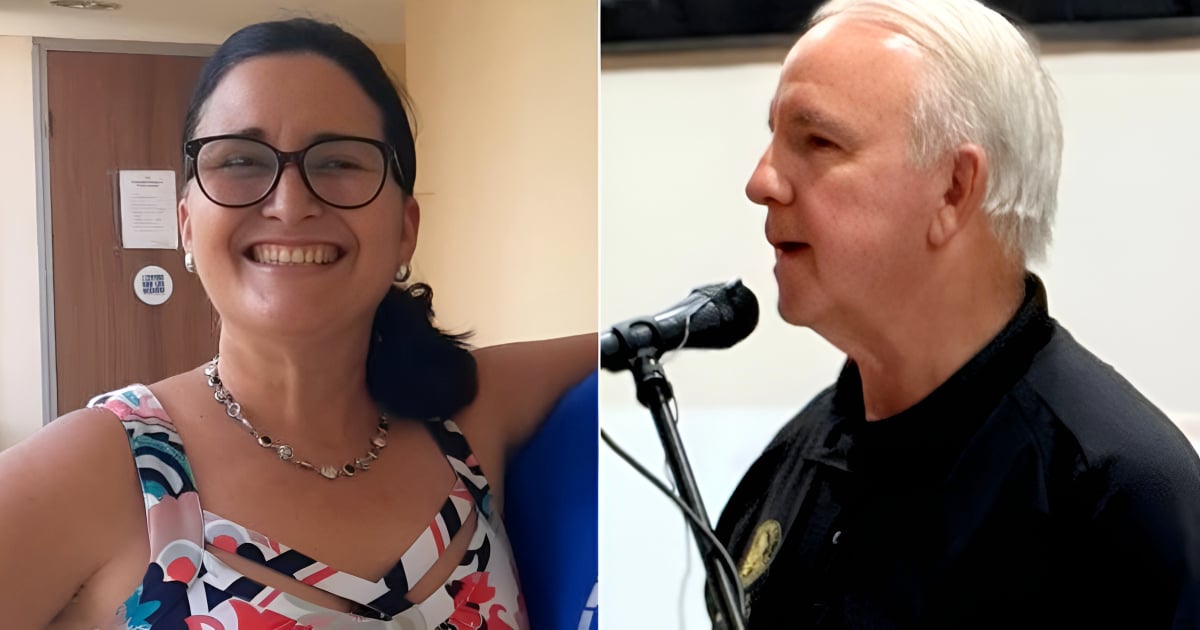
A Cuban Ministry of Foreign Affairs official, Johana Tablada de la Torre, has once again been caught spreading false information on social media. This time, she shared a fake news story attributing a statement to Cuban-American Congressman Carlos Giménez that he never made.
In a recent Facebook post, Tablada de la Torre reshared content from Frank Ernesto García Hernández, a typical "cyber warrior" profile, featuring an image with a fabricated quote attributed to the congressman: "Anyone who wants a Cuba without Castroism must be ready to sacrifice their loved ones, bringing the country to a point where families on this island suffer unimaginable shortages of all kinds."
García Hernández concluded his post by claiming, "They dream of an 'ethnic cleansing' in Cuba. Bulldozing the country and 'Americanizing' the island." This manipulative message was amplified by the ambassador of Miguel Díaz-Canel, spreading a falsehood aimed at tarnishing the image of the Cuban-American politician.
The image even included a link to an article from the independent media outlet Diario de Cuba but left out a crucial detail: the statement attributed to Giménez was actually part of an opinion piece by journalist Rafaela Cruz. In her editorial, Cruz discusses the potential impact of the congressman's proposal to cut remittances and flights to Cuba, noting that such measures would require "sacrifices" for Cuban families. However, the statement was never presented as a direct quote from Giménez. This manipulation was spread on social media by pro-regime profiles, transforming it into a false narrative to incite outrage.
Ironically, this disinformation was propagated by a high-ranking regime official who has repeatedly accused independent media of "manipulating" and "lying" about Cuban realities. This incident underscores the opposite: it is the regime's spokespeople who disseminate false narratives without journalistic rigor or respect for the truth.
A Campaign Against Cuban-American Politicians
Tablada de la Torre's post, rooted in a fake and decontextualized quote, is not an isolated incident but part of a systematic campaign by the Cuban regime against Cuban-American political leaders such as Giménez, Marco Rubio, and María Elvira Salazar, among others. These officials are often labeled as "annexationists," "puppets of imperialism," or "enemies of the Cuban people," despite being democratically elected representatives actively advocating for the Cuban exile community in the U.S. Congress.
For instance, the State Security publicly accused Giménez of being an "annexationist" and promoting a "hate agenda" following his visit to Guantánamo, offering no solid arguments beyond ideological disqualifications. These accusations misuse terms like "nation," "homeland," or "Cuba" to equate them falsely with the so-called "Cuban revolution."
The Moral Bankruptcy of Revolutionary Diplomacy
This incident highlights the moral bankruptcy of what was once dubbed "revolutionary diplomacy." Instead of providing genuine explanations for the economic collapse, repression, massive exodus, or preventable deaths in resource-strapped hospitals, the regime opts to attack those who expose its shortcomings, creating enemies and distracting with media manipulation campaigns.
This latest attempt at manipulation by Tablada de la Torre is not only debunked by facts but also clearly portrays the impotence of a regime unwilling to acknowledge its own failings. The use of fake news against critical voices is no longer surprising but reaffirms that the greatest threat to the dictatorship lies not in Washington, but in the truth.
Understanding the Impact of Misinformation in Cuban Politics
What false statement was attributed to Congressman Carlos Giménez?
A fabricated statement suggested that Giménez advocated for sacrificing Cuban families to eradicate Castroism, a quote he never actually made.
Who originally wrote the opinion piece from which the quote was taken out of context?
The opinion piece was written by journalist Rafaela Cruz, discussing the potential impacts of cutting remittances and flights to Cuba.
Why did Johana Tablada de la Torre share the manipulated post?
Tablada de la Torre shared the manipulated post as part of a broader campaign to discredit Cuban-American politicians critical of the Cuban regime.