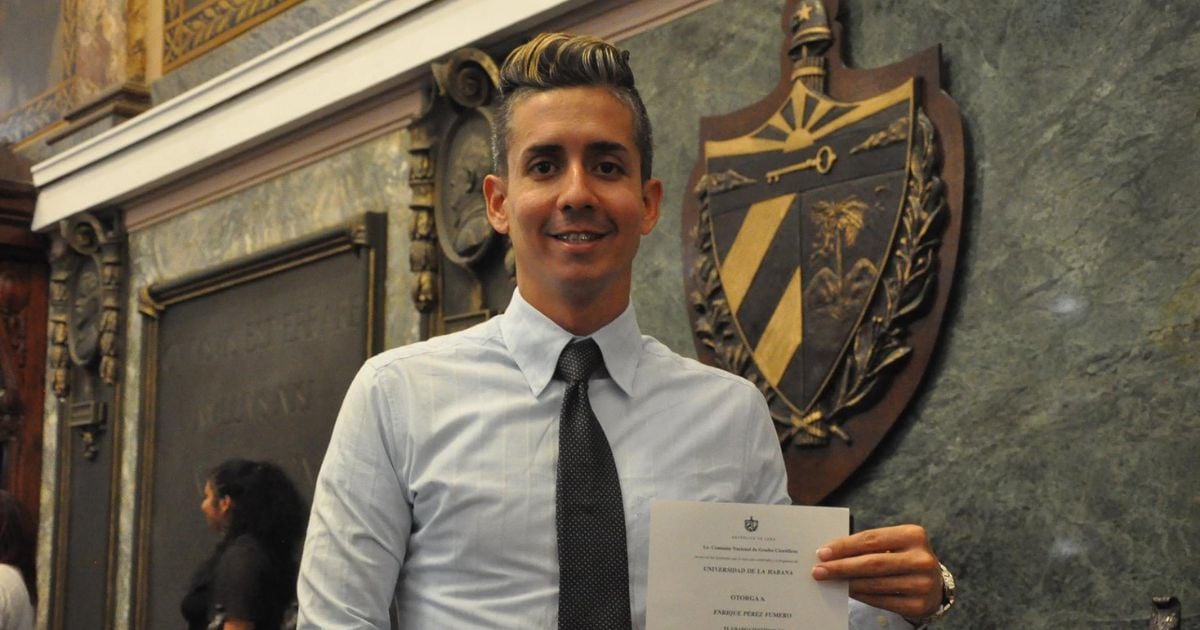
Renowned journalist Enrique Pérez Fumero, affiliated with the CMKC station and a university professor, has been discharged from the Saturnino Lora Provincial Hospital after enduring over a month of medical treatment. He was the victim of a vicious attack that occurred on August 3 in the historic center of Santiago de Cuba. According to his colleague and friend, Cuscó Tarradell, who shared updates on Facebook, Fumero underwent two surgeries due to severe injuries, including a skull base fracture, cerebral hemorrhage, and multiple facial wounds.
His recovery journey has been arduous, requiring intensive care, blood transfusions, and tube feeding for several weeks. In the days leading to his discharge, he showed signs of improvement, managing to move from bed to floor independently and completing his antibiotic course. After 32 days in the hospital, the neurosurgical team approved his return home, where he will continue a lengthy rehabilitation process.
Fumero's family has arranged for a private nurse to assist him initially, followed by enrollment in a physiotherapy program to help him regain mobility and confidence. His mother, Teresa, father Lázaro, brother Roberto, and other family members have been instrumental in supporting his recovery.
A Violent Assault in Santiago's Heart
The attack on Pérez Fumero took place at the intersection of Barnada and San Mateo, just a short distance from the Moncada Barracks. The assailants reportedly stole a pair of Converse shoes, a mobile phone, and a wallet, leaving him gravely injured in the street. The family suspects a homophobic motive behind the attack, given its brutality. Despite the severity of the incident, Cuban authorities remained silent for over 24 hours, with independent journalist Yosmany Mayeta Labrada, based in Washington, initially breaking the news on social media. Family and colleagues subsequently kept the public informed about Fumero's condition.
Rising Insecurity and Official Silence
The case of Pérez Fumero has become emblematic of the escalating insecurity and violence in Santiago de Cuba, a city grappling with increasing reports of assaults and beatings. However, official media outlets have largely ignored these incidents, fostering a climate of uncertainty and distrust among the populace. "Of his attackers, nothing at all," lamented Mayeta Labrada on social media, highlighting the lack of information regarding the police investigation. No arrests have been announced, reinforcing perceptions of impunity and government secrecy.
The combination of escalating violence, prolonged power outages, shortages, and the absence of official responses is contributing to widespread despair among residents. For journalists, such attacks highlight the additional risks they face in an environment characterized by a lack of protection and state control over information.
Despite the family's request for privacy during this recovery phase, Enrique Pérez Fumero's return home is seen as a triumph of individual resilience against violence and institutional neglect. The journalist embarks on a challenging road to rehabilitation, buoyed by the solidarity of colleagues, friends, and citizens demanding justice.
FAQs on Safety and Security in Santiago de Cuba
What happened to Enrique Pérez Fumero?
Enrique Pérez Fumero, a journalist, was brutally attacked in Santiago de Cuba, suffering severe injuries that required extensive medical treatment and surgeries.
How has the community responded to the attack?
The community, including colleagues and family, has shown strong support for Fumero, demanding justice and highlighting the broader issues of insecurity in the city.
What measures are being taken for his recovery?
Fumero's recovery includes home care by a private nurse and a planned admission to a physiotherapy center to restore his physical abilities.