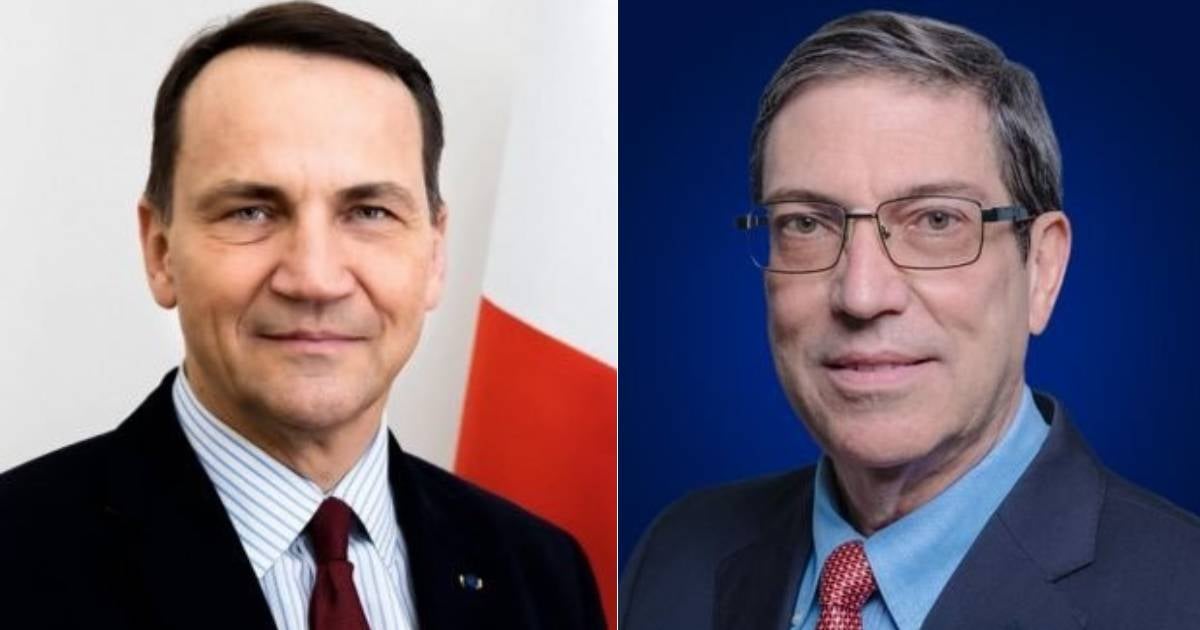
The Cuban Foreign Minister, Bruno Rodríguez Parrilla, and his Polish counterpart, Radosław Sikorski, engaged in a heated exchange on the social media platform X. This confrontation followed the awarding of the Lech Wałęsa Solidarity Prize 2025 to opposition leader Berta Soler, head of the Ladies in White, in Miami.
Rodríguez harshly criticized the award, arguing that honoring those who, in his view, "subvert Cuba's constitutional order" is part of what he calls "the corrupt and anti-Cuban agenda of the U.S. Secretary of State." He labeled the opposition as "lackeys" profiting from American taxpayer money.
Sikorski was quick to respond. The Polish Foreign Minister clarified that the prize "is funded by Poland, not the United States," and it celebrates those who peacefully fight for freedom and democracy. He emphasized, "The people of Cuba deserve this too," a message resonating with the symbolism of a nation that endured decades under a communist regime (1945-1989) before achieving democratic transition.
Diplomatic Tensions and Historical Context
In response, Bruno Rodríguez reiterated the Cuban regime's official stance, asserting that, according to their perspective, "Cubans have lived in freedom and democracy since January 1, 1959, despite the U.S. government's 66-year attempt to subjugate us."
The exchange took place a day after the ceremony at the Biltmore Hotel in Coral Gables, Miami, where Berta Soler was recognized with one of the most prestigious international awards for human rights defenders. Ironically, contrary to the Cuban Foreign Minister's claims, Soler was unable to travel to Miami due to the regime's restrictions and reported being cut off from communication on the morning of the event. From afar, she expressed gratitude for the award and reiterated her refusal to accept a "one-way exit" from Cuba.
Contrasting Views on Cuban Democracy
Beyond the diplomatic rhetoric, this controversy highlights the ongoing clash between Havana's official narrative, which insists on defining itself as a democracy since 1959, and the broader international community, which points to systematic repression against dissidents and the lack of freedoms on the island.
Frequently Asked Questions About Cuban-Polish Diplomatic Dispute
Who funds the Lech Wałęsa Solidarity Prize?
The Lech Wałęsa Solidarity Prize is funded by Poland, not the United States.
Why was Berta Soler unable to attend the award ceremony in Miami?
Berta Soler could not attend the ceremony due to travel restrictions imposed by the Cuban regime and reported being cut off from communication.
What is the Cuban government's stance on its political system?
The Cuban government insists that the country has been a democracy since 1959, despite international criticism of its repression of dissent and lack of freedoms.